Ask a tin can supplier for a "BPA-free" interior and you will get a nod, a datasheet and often a one-line declaration. That exchange used to be enough. As of November 2026 it is not — and the gap is not about BPA itself. It is about what replaced it, and whether anyone has measured what migrates out of that replacement into the food.
The EU's main BPA transition for single-use food-contact articles closed on 20 July 2026 under Regulation (EU) 2024/3190. Buyers who spec a can today are therefore buying a post-BPA coating generation. The problem: "BPA-free" describes an ingredient list, not a migration result. Regulatory toxicologists have a name for what happens when a banned molecule is swapped for a structurally similar one that has not been tested as thoroughly — regrettable substitution. Three independent signals in late 2026 suggest the interior coating market is living through exactly that, and that the burden of proof is landing on buyers rather than suppliers.
This article does not argue that coated tinplate is unsafe. Steel cans remain the most reliably recycled format across food packaging applications in circulation. It argues that the word "free" is the wrong thing to buy. The right thing to buy is a migration data pack that survives a customs officer, a retailer audit and a 2028 deadline.
The Deadline You Missed Is Not the Deadline That Matters
Most sourcing teams logged 20 July 2026 as "the BPA ban date" and moved on. Three later details change the picture for anyone placing tin can orders now.
- The clock is first placement on the market, not manufacture. A February 2026 correction to Regulation (EU) 2024/3190 confirmed that the deadlines attach to when packaging is first placed on the EU market. Empty cans placed on the market before the cut-off may still be filled and sealed for a further 12 months, and the food may be sold until stock runs out. So BPA-lined product can legally remain on shelves — which is precisely why a supplier can claim "we still ship to the EU, no problem" while being technically accurate and commercially obsolete.
- Fruit, vegetable and fishery cans have until 20 January 2028. That longer tail covers some of the highest-acid and highest-sulfur food applications — exactly the ones where interior coating performance is hardest. Buyers of tomato, pickled vegetable and seafood tins will face a second specification wave in 2027.
- The declaration travels with the can, whether or not bisphenols were used. The Commission's Note for Guidance sets a residual BPA detection limit of 1 µg/kg and requires a declaration of conformity to be passed down the supply chain regardless. A datasheet saying "BPA-NI" is not that declaration.
The practical consequence: a buyer auditing a supplier in November 2026 should not ask "is it BPA-free?" They should ask "which article category is this coating cleared for, what is the residual BPA result, and can you show the test method behind the DoC?" If the answer stops at the first question, treat the remaining two as unknown.
Why "Regrettable Substitution" Is the Right Frame
In 2023 the European Food Safety Authority cut the tolerable daily intake for BPA to 0.2 nanograms per kilogram of body weight — and estimated that average and high consumers in every age group exceed it by two to three orders of magnitude. That assessment is what drove the EU ban. When a limit moves that far, the replacement chemistry gets scrutinised next. Scrutiny has started, and the findings are uncomfortable rather than conclusive.
A review of can-lining chemistry published in November 2026 lays out the pattern. One polyester-coated can was found to release a breakdown product called fenozan in everything that migrated from it. It did not damage DNA in standard tests, but it weakly interfered with rat thyroid cells at high concentrations in a dish. A separate 2016 survey found many acrylic linings also contained polystyrene. A 2022 review concluded that many substances capable of migrating from can coatings have not been identified, and only some have been tested for toxicity — while measured dietary exposure has generally been low. Notably, a study of real canned food at the end of shelf life found polyester monomers and oligomers significantly lower than in the laboratory simulants regulators use.
None of that proves the replacement linings are harmful. The honest summary: absence of proof of safety is being marketed as proof of safety — the same regrettable substitution pattern the industry saw with shorter-chain PFAS. Buyers who lived through that cycle should recognise the script.
The Three Interior Systems You Are Actually Choosing Between
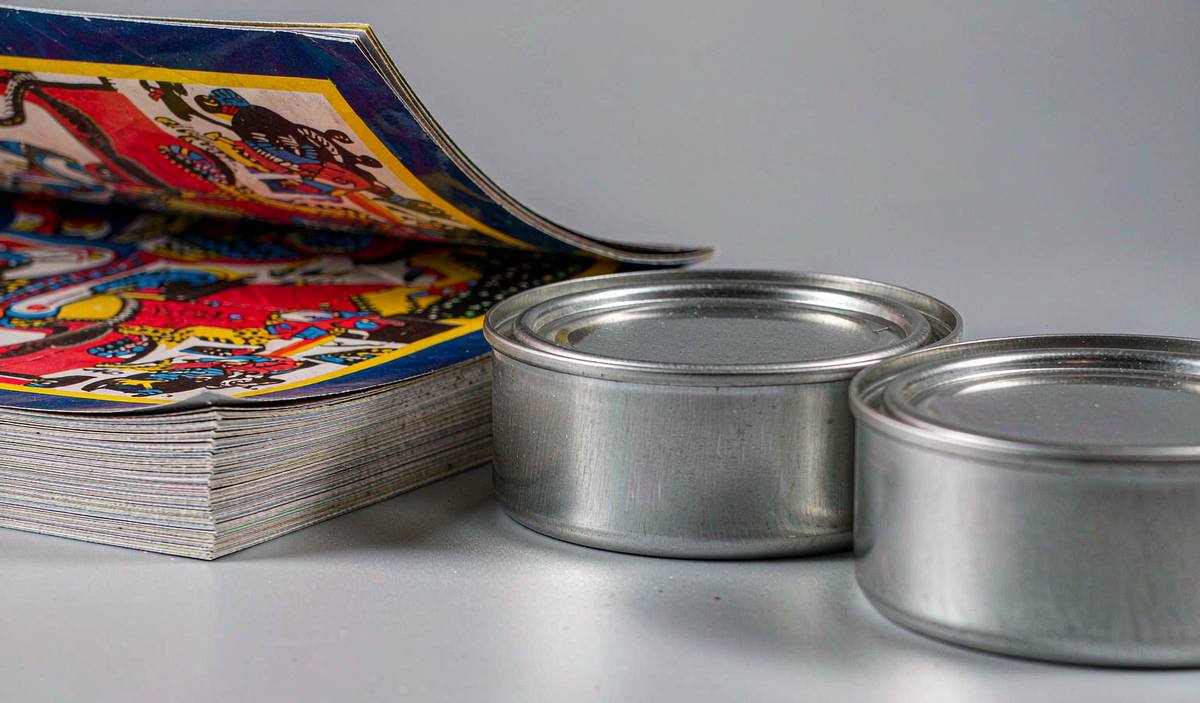
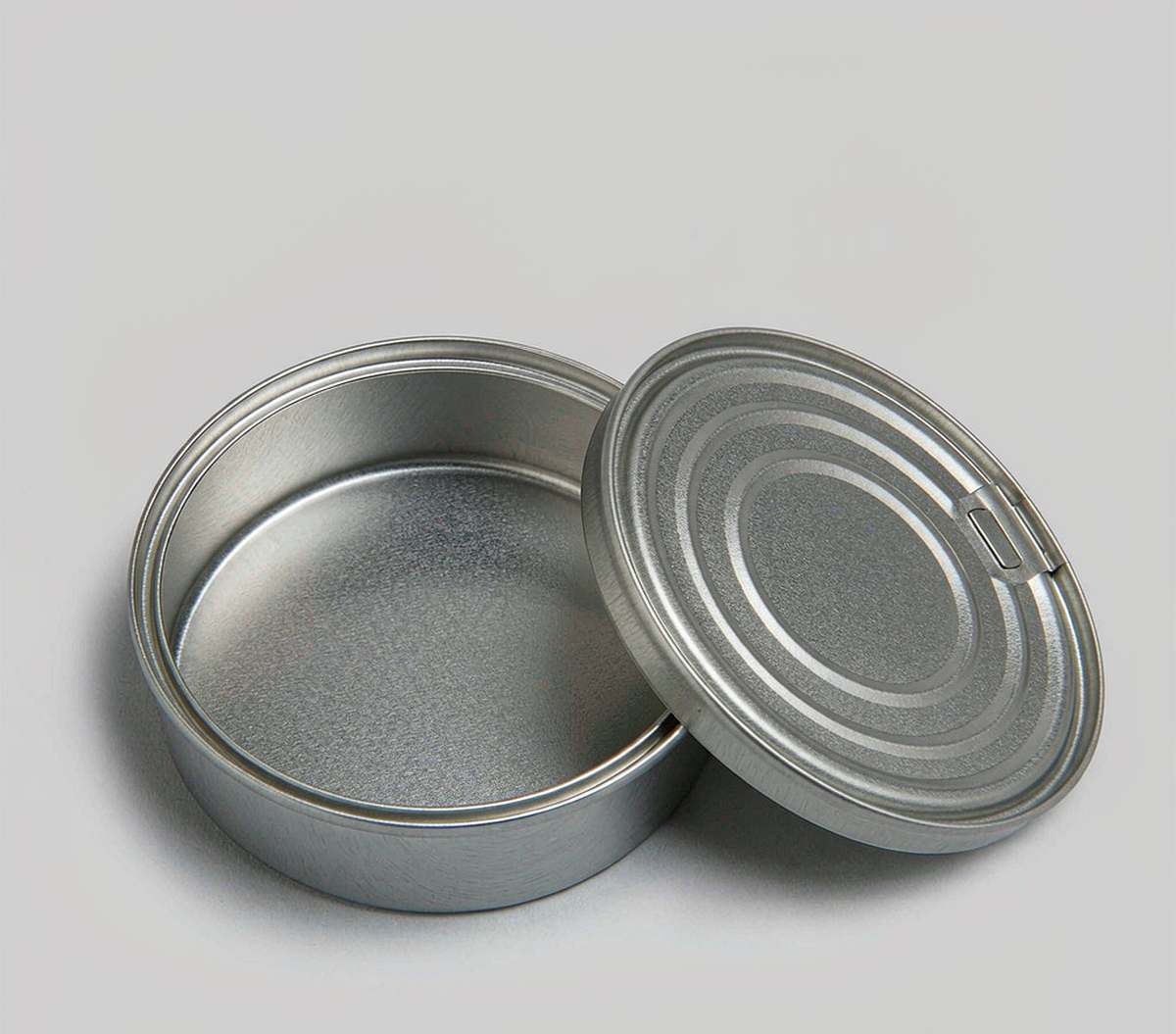
Interior coatings for food tin cans in 2026 fall into three commercial groups. All three sit on tinplate — the question is not which container to switch to, but which lining specification to write into your next purchase order. The steel body is the constant: magnetic separation, repeated recycling without downgrading, and no recycled-plastic content obligation under PPWR Article 7. If you are new to the format, our overview of food-grade tinplate cans shows the body and closure options these linings are applied to.
| Interior system | Chemistry position | Evidence maturity | Best fit | Indicative cost |
|---|---|---|---|---|
| Gen 2 BPA-NI polyester (styrene-free) | No BPA, no styrene carrier | Highest; full DoC + migration package standard | EU food cans, acid and sulfur foods | Baseline +8-15% |
| First-gen BPA-NI acrylic / early polyester | No BPA; some systems retain styrene chemistry | Uneven; declarations vary by supplier | Non-EU, dry foods, cost-led SKUs | Baseline |
| TMBPF-based lining | Bisphenol-based but exempted in several US rules | Established in US beverage use; less cited for EU food cans | US beverage cans, specific acid applications | Baseline +10-20% |
Gen 2 is the defensible EU default, and the reason is procedural as much as chemical: the conversion takes four to eight weeks, not four to eight days, because the supplier must re-qualify the coating against the actual food formula. A coating that is compliant on paper but blisters after six months in a tomato can is still a failed package. Buyers already deep in the transition should read the migration-focused analysis in our BPA-NI Gen 2 tin can coatings guide before locking a Q1 specification.
China's own rulebook is tightening in parallel. GB 4806.10-2025, mandatory since 2 September 2026, cut the BPA specific migration limit from 0.6 to 0.05 mg/kg and added a "not detectable" requirement for aromatic primary amines at a 0.01 mg/kg limit. If you source Chinese-made tins for any market, our GB 4806.10 buyer checklist gives the component-level questions to ask — the same ones that now apply to a post-BPA EU programme.
The US Position Is Not the EU Position — and That Is a Cost Decision
The FDA still considers BPA safe at current dietary levels and says it is "currently reviewing" a 2022 petition asking it to remove or restrict authorised uses; no decision has appeared in the Federal Register. Washington State took a different route: since 1 January 2025 it has banned the manufacture, sale and distribution of drink cans with bisphenol-based epoxy linings, while food cans are not banned but must be reported. Both the FDA and Washington rules exempt TMBPF-based linings.
For a buyer shipping both continents, that split is expensive if handled lazily. Running one global coating to the strictest common denominator costs more per unit than a two-line specification — but it avoids the far larger cost of a segregated SKU, a failed retailer audit, or a recall notice in one market that contaminates the brand in the other. The calculation below uses representative B2B figures for a food tin programme; treat them as a working model to be replaced by your supplier's quoted numbers.
| Order band | MOQ | Unit price (printed, food-grade) | Lead time | Migration / DoC cost |
|---|---|---|---|---|
| Trial / sample run | 500-1,000 | $0.55-1.20 | 25-35 days | $800-2,500 per coating test |
| Standard production | 3,000-10,000 | $0.29-0.72 | 30-45 days | $1,500-3,000 per SKU DoC |
| Annual programme (existing mould) | 50,000+ | $0.18-0.45 | 21-28 days + Q4 5-7 days | Amortised across volume |
Two effects are worth pricing explicitly. First, a Gen 2 conversion adds four to eight weeks of re-qualification on top of normal tooling lead time — if your Q1 2027 programme has not started that clock, it is already late. Second, Q4 freight and the pre-CNY production rush (CNY 2027 falls on 6 February) add five to seven days to an already stretched 21-28 day standard window. The 2027 tinplate cost outlook covers the substrate side of the same budget: steel coil and carbon pricing are rising into next year, so the coating decision is best made once, against a fixed specification, rather than renegotiated per shipment.
What a Defensible Migration Data Pack Contains
Use this as the attachment list in your next RFQ. A supplier who can produce all eight items is operating at a different compliance level from one who cannot — and the price difference is usually smaller than the cost of a single failed audit.
- Coating system declaration naming the resin family (polyester, acrylic, TMBPF) and confirming styrene status — not just "BPA-NI".
- Residual BPA result with method and reported value against the 1 µg/kg detection limit.
- Overall and specific migration testing on the intended food simulant, at the intended shelf life and storage temperature — not a generic simulant result filed three years ago.
- PFAS / total fluorine screen at 25 ppb single, 250 ppb sum and 50 ppm total fluorine for food-contact packs.
- Heavy metal result for the four regulated metals at the 100 mg/kg combined limit, covering body, coating, ink and seam stripe.
- Side-seam and weld-stripe protection detail — the seam is where coating continuity most often fails, and labels rarely list it.
- Retort / thermal process confirmation if the can is sterilised; a coating that survives ambient filling can fail a retort cycle.
- DoC with article category, signature and retention commitment — five years for single-use, ten for reusable, retrievable within ten days on request.
The Bottom Line
The regulatory question for 2027 is no longer "does this can contain BPA?" It is "can you show me what comes out of this lining, under my food, at my shelf life, with a method I can audit?" Regrettable substitution is not a reason to abandon metal packaging — steel cans still recycle magnetically without downgrading, carry no recycled-plastic content mandate, and remain cheaper than glass at 10,000+ units. It is a reason to stop buying the word "free" and start buying the data pack.
Put the eight items above into your RFQ, allow four to eight weeks for a Gen 2 re-qualification, and lock the specification before the Q1 2027 production window closes. Our custom tin can programme starts from the lining and works outward. A tin can is still the right container. A one-line declaration is not a specification.
Need Help Choosing the Right Tin?
Tell us what you plan to pack and share an article or model you found useful. We can help confirm size, closure and sample options.