"Not a toy" is a decision you make, not a fact you discover
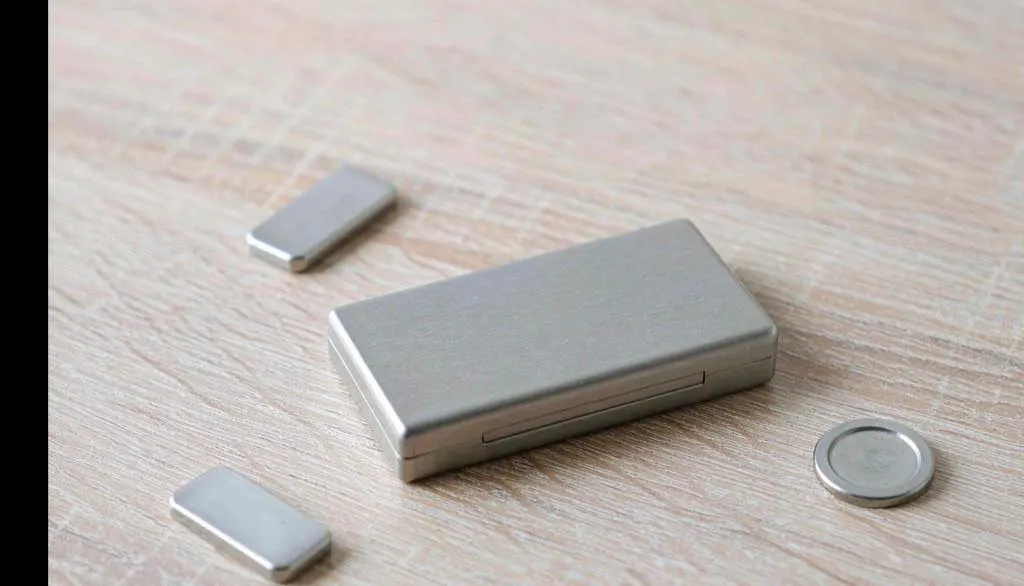
A magnetic slider, a push-coin, a machined fidget clicker — none of these are obviously toys. They are sold to adults, priced like collectibles and marketed on stress relief. But a tin containing a small metal object with a moving part is one product-page adjective away from being legally classified as one, and the classification is decided by how it is presented, not by what it is.
Under Directive 2009/48/EC of 18 June 2009 on the safety of toys, a toy is a product designed or intended, whether or not exclusively, for use in play by children under 14 years of age. The "intended" limb is read from the labelling, the imagery, the sales channel and the price point. A listing that shows a child's hands, an age range, or a cartoon motif can pull an adult product into scope regardless of the manufacturer's intent. Once in scope, the obligations attach to the whole article placed on the market — including the tin.
The economics are unfriendly to getting this wrong. If your product is a toy, the tin is a component of a toy and must be covered by the chemical migration testing. If it is not, none of that applies and you can spend the money on the hinge instead. There is no middle option, and the decision has to be made before artwork, not after.
What EN 71-3 actually asks of a metal tin
The chemical requirements of the Directive have applied since 20 July 2013; the Directive itself has applied since 20 July 2011. The harmonised standard for element migration is the EN 71-3 series, and the edition currently in force is EN 71-3:2019+A2:2024, published by CEN in December 2024 and required to be adopted at national level by June 2025. If your test report cites an earlier edition, it is stale.
The standard does not measure what is in the material. It measures what migrates out of it under a simulated gastric condition, for 19 regulated elements. It sorts every material into one of three categories, and the category determines the limit.
| Category | Material | Where a tin sits | Aluminium limit | Lead limit |
|---|---|---|---|---|
| I | Dry, brittle, powder-like or pliable | No — unless the tin ships with a putty or clay | 2,250 mg/kg | 13.5 mg/kg |
| II | Liquid or sticky | No | 560 mg/kg | 3.4 mg/kg |
| III | Scraped-off | Yes — a lacquered metal surface is Category III | 28,130 mg/kg | 160 mg/kg |
The important column is "where a tin sits". A painted or lacquered metal surface is not a coating in the liquid sense — it is a solid surface a child could bite or scrape, which puts it in Category III, the least restrictive of the three. The aluminium figures above are the limits introduced by Commission Directive (EU) 2019/1922, which revised them to 2,250 / 560 / 28,130 mg/kg on the basis of a SCHEER tolerable daily intake of 0.3 mg/kg body weight per day, allocating 10% of that intake to toys.
Practical consequence: for a decorated tinplate shell, the migration limits are rarely the binding constraint. The binding constraint is the decoration itself — a pigment or a foil chosen without reference to the standard is what fails. Specify that the inks, varnishes and foils are sourced to EN 71-3 Category III and get the test report from the decorator, not from the tin maker.
The 2030 deadline that is already running
On 26 November 2025 the EU adopted Regulation (EU) 2025/2509 on the safety of toys, published on 12 December 2025. It entered into force on 1 January 2026 and will apply from 1 August 2030, at which point Directive 2009/48/EC is repealed. The transition is four and a half years, which is long enough to ignore and short enough to regret.
Two provisions matter to anyone specifying packaging now:
- Digital Product Passport. Every toy will require a DPP carrying compliance information, accessible via a data carrier on the product. Technical requirements will follow the delegated acts under the Ecodesign for Sustainable Products Regulation, Regulation (EU) 2024/1781.
- Broader safety assessment. The Regulation requires a comprehensive assessment covering chemical, physical, mechanical, electrical, flammability, hygiene and radioactivity hazards before placing on the market, and tightens restrictions on endocrine disruptors, skin sensitisers, PFAS and bisphenols.
If you are building a brand and a supply chain now, the cheap move is to design the tin so it can carry a data carrier later — a flat, unprinted area on the base, outside the artwork panel, that can take a laser mark or a label without a re-tool.
Structure: the four ways a small tin opens, and what wears out
An EDC object is handled hundreds of times a month. The tin is not only a box; it is part of the tactile experience, and it is the part that gets blamed when the feel degrades. Each closure family has a different wear point.
| Structure | Mechanism | What wears first | Specify | Cost band |
|---|---|---|---|---|
| Hinged lid | Formed knuckle and pin, or a folded tab | The hinge radius; cracking starts there | Minimum inside radius; pin material and end finish | Highest |
| Slide lid | Friction fit in a formed channel | Channel walls; feel goes loose before it fails visibly | Tolerance band in mm; retention force after cycling | Low |
| Screw top | Rolled thread, multi-turn | Thread crests and any decorative plating on them | Thread pitch; turns to seat | Moderate–high |
| Slip lid | Vertical friction on a drawn body | Lid skirt; dents propagate into fit | Wall gauge; skirt depth | Lowest |
The failure most people anticipate — the hinge snapping — is rare. The failure most people get is a slide lid that feels precise on day one and sloppy by week six, because the channel was specified as a dimension rather than as a force. Write the acceptance criterion as a retention force measured after a defined number of open/close cycles, and require the sample to be cycled before you approve it. A supplier can hit any number you name; a supplier given no number will reproduce whatever the tool happens to make. More on the trade-offs in our guide to tin box closure types.
Coating abrasion: write the spec, do not commission the test
A carried metal object is abraded by keys, by pocket lint, by a desk surface, and by the object it contains. Three measurable properties describe how a decorated surface survives that, and all three cost almost nothing to specify if you name them in the RFQ and a great deal to negotiate if you discover them later:
- Film hardness — stated by pencil hardness, with the value named. This governs scratch resistance on flat panels.
- Adhesion — cross-cut adhesion on the formed part, not on a flat coupon. Adhesion on a flat panel tells you nothing about a drawn corner where the film has been stretched.
- Abrasion resistance — a defined number of cycles on a specified abrasive wheel at a stated load, with an agreed pass criterion such as "decoration remains legible".
The geometry does as much work as the chemistry. Embossed or debossed relief carries no ink on its upper surfaces, so it degrades far more slowly than a flat print — an embossed logo on a hinge lid will still be legible after the surrounding offset print has gone grey. That is why the finishes that survive in this category are the ones that put information into the metal rather than onto it. Our guide to tin box finishes covers the full set, and this geometric gift tin is a reference for what an emboss-plus-matte-lacquer combination looks like in the hand. Finish choice is also where the unit cost moves: foil, 3D embossing and soft-touch varnish each add roughly $0.10–$0.35 per unit on a small tin, which is more than the shell itself on the cheapest formats.
Worked example: a 2,000-unit crowdfunding drop
A first drop of 2,000 hinged slide tins, 90 × 55 × 20 mm, with a debossed logo, matte soft-touch varnish and a laser-marked base for traceability.
- Tooling: $300–$900 for a new shape, say $700. At 2,000 units that is $0.350 per tin — more than a third of the unit price. At 5,000 units it is $0.140.
- Shell: $0.45–$0.95 at this size and quantity; a plain slip-lid body sits at the bottom, a hinged body with formed emboss at the top. Say $0.70.
- Finishes: deboss plus matte lacquer, $0.15. Laser mark, $0.05–$0.10 if done inline.
- Subtotal ex-works: about $1.20 per tin, or $2,400 for the drop.
Freight is the line that gets mispriced on crowdfunding runs because the tins ship empty and nested rather than flat. Two thousand tins of this size occupy roughly 0.6–0.9 m³ once cartoned. Freight per tin = (0.75 × R) ÷ 2,000. At R = $150/m³ that is $0.056 per tin, 4.7% of ex-works. At air freight, which is what a missed backer date forces, the rate is quoted on volumetric weight at a ratio of 6,000 and the same shipment costs several times the entire ex-works value. The 20–25 day replenishment cycle for an existing mould exists precisely so you do not have to make that call — ship the first 1,000 by sea and hold the rest against the reorder.
If the product is marketed to adults, add roughly $0 for toy testing and spend it on a thicker hinge radius instead. If there is any chance it will be sold as a children's item, budget for EN 71 testing on the decorated article before the drop ships, because a retroactive failure is a recall and not a reprint.
Five lines for the RFQ
- Intended user, declared in writing — adult collectible or children's product. Everything downstream follows from this.
- Ink, varnish and foil compliance against EN 71-3 Category III, with the test report from the decorator and the standard edition cited.
- Closure acceptance as a force after cycling, not a dimension on a drawing.
- Film hardness and adhesion on formed surfaces, with the pass criterion written down.
- A reserved flat area on the base for a data carrier, so Regulation (EU) 2025/2509 is a labelling change rather than a re-tool.
The EDC category rewards objects that feel engineered. Most of that feeling comes from tolerance and finish rather than from the material, and both are specified in the RFQ — long before anyone asks how much the tin costs. For shape options at this scale, see our survey of tin box shapes, or browse the gift tin range for formats already in production.
Need Help Choosing the Right Tin?
Tell us what you plan to pack and share an article or model you found useful. We can help confirm size, closure and sample options.