A US Bill That Reaches the Inside of the Can, Not Just the Plastic
Most tin-can buyers breathed easier when the EU's PPWR left metal outside its recycled-content math — under metal's exemption from PPWR's recycled-content rule, a mono-material tinplate can needs no recycled-resin quota. But a US bill moving through Congress in mid-2026 attacks the can from a different direction: not how much recycled material it contains, but what chemistry sits between the steel and the product. If your tin carries an epoxy interior lining or a soft plastic lid gasket, H.R. 9231 is worth reading long before it becomes law.
What H.R. 9231 and H.R. 9593 Actually Do
On 9 June 2026, Representatives Jan Schakowsky (D-IL) and Rosa DeLauro (D-CT) introduced H.R. 9231, the No Toxic Chemicals in Food Packaging Act of 2026, referred to the House Committee on Energy and Commerce. Its Senate twin, S. 4724, was filed by Senator Richard Blumenthal (D-CT) in the HELP Committee. The bill amends the Federal Food, Drug, and Cosmetic Act (§ 409) to add a new subsection that deems 15 chemical classes "unsafe" for food-contact use, and cross-references the adulteration provision so food packed with them would be treated as adulterated. The restrictions would take effect two years after enactment. Running alongside it, H.R. 9593 — the Keep Food Containers Safe from PFAS Act of 2026 — bans the intentional addition of PFAS to food packaging and carries a fixed effective date of 1 January 2027, regardless of the broader bill's passage.
Where the 15 Substances Actually Live Inside a Tin Can
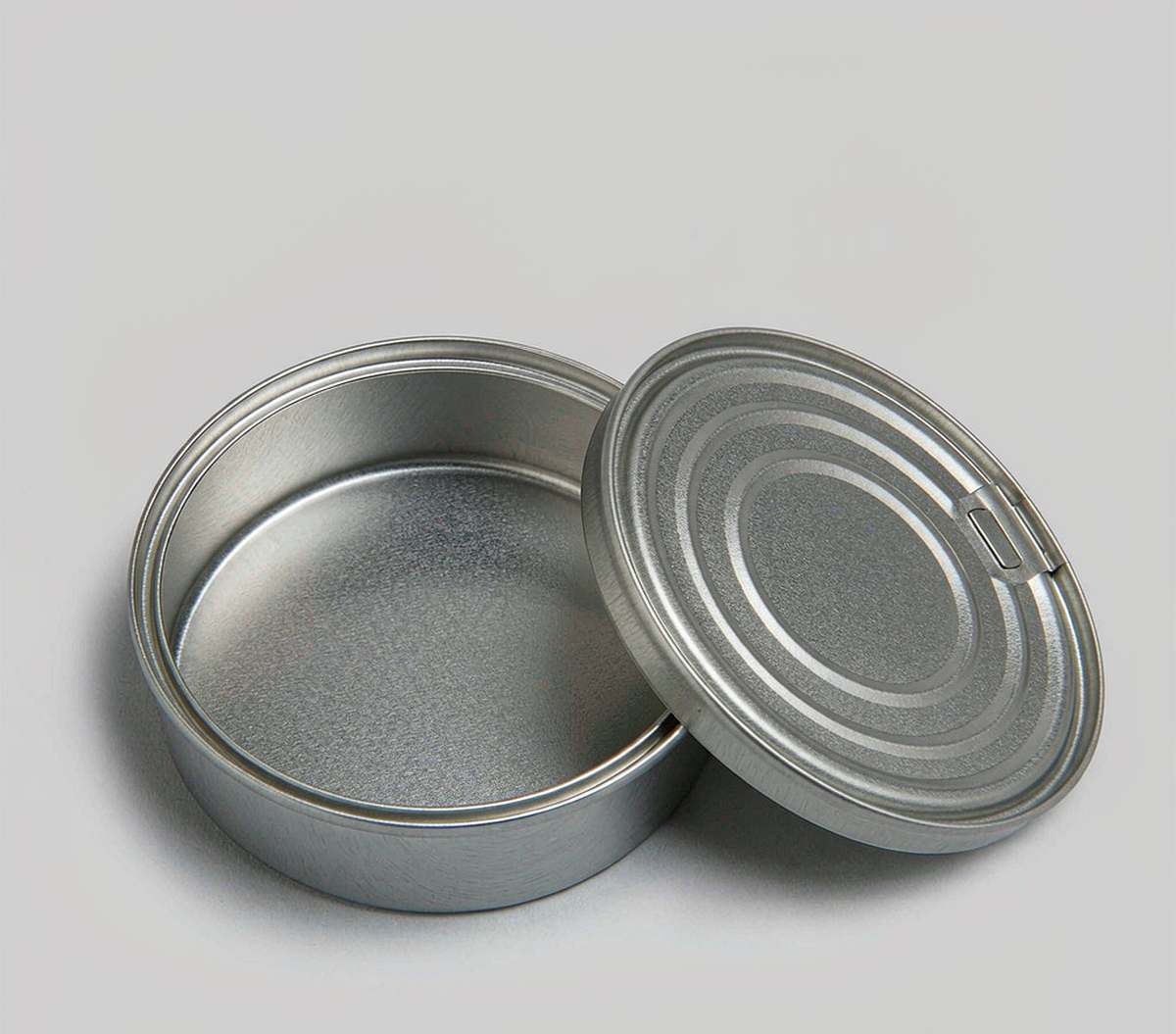
The body of a tinplate can is steel with a micro tin coating — inert, and not the target. But the package is a system, and two of its parts are squarely food-contact substances: the interior lacquer that stops the product touching bare metal, and the gasket that makes the lid seal airtight. Both are exactly where the banned classes tend to hide.
| Substance class (15 total) | Where it sits in a metal tin | Why buyers care |
|---|---|---|
| Bisphenols (A, B, S, F, AF) | Interior epoxy / coating | Legacy can linings; must move to BPA-NI |
| Styrene polymers | Gen-1 lining resins, some inks | An import point for many "BPA-free" linings |
| Ortho-phthalates | Soft rubber lid gasket / seal | Plasticizer used inside closures |
| Chlorinated paraffins | Silicone / elastomer seal rings | Softener in lid gaskets |
| PFAS | Grease-resistant coatings, some inks | H.R. 9593 bans intentional use 2027-01-01 |
| Benzene, chloroform, 1,4-dioxane | Outer printing solvent residues | Low food-side risk; a print-spec item |
| Acrolein, acrylamide, BHA, formaldehyde, ethylene oxide, methylene chloride, asbestos | Process / auxiliary residuals | Supply-chain verification, not lining-specific |
The uncomfortable takeaway: a steel can is not automatically outside this law, because the law targets the lining and the seal, not the shell. The same logic already drives why the coating dossier — not the steel — decides food-contact compliance for importers today.
Coating Generations Against the H.R. 9231 Screen
"BPA-free" has never been enough, and H.R. 9231 makes that structural. Here is how the common lining and seal families line up against the three substance classes most relevant to metal tins — bisphenols, styrene polymers, and phthalate / chlorinated-paraffin gaskets.
| Lining / seal type | Bisphenol | Styrene | Phthalate / CP gasket | H.R. 9231 verdict |
|---|---|---|---|---|
| Traditional epoxy (BPA) | Fails | May pass | n/a | Fail — bisphenol ban |
| BPA-NI Gen-1 acrylic-polyester | Pass | Often present | n/a | Verify styrene-free |
| Gen-2 styrene-free polyester | Pass | Pass | n/a | Pass — recommended |
| Phthalate-plasticized lid gasket | n/a | n/a | Fails both | Fail — replace gasket |
The clean answer is a Gen-2 styrene-free polyester interior paired with a phthalate-free, chlorinated-paraffin-free lid gasket. The gasket is the step most spec sheets skip: a buyer can specify a perfect lining and still import a closure carrying ortho-phthalates in its seal. For a classic round food tin or any food-grade tin packaging program, both layers must be written into the purchase order.
The Numbers a Buyer Has to Plan Around
Treating H.R. 9231 as a future event is the expensive mistake. The cost of getting ahead is bounded and predictable:
- Rescreen testing: migration / extraction testing runs roughly $800–$2,500 per item — in the same band as the documentation costs buyers already budget for PPWR.
- Coating line conversion: switching a line to a verified Gen-2 styrene-free lacquer with cure and migration validation takes about 4–8 weeks.
- Standard custom run: MOQ 1,000–3,000 units, 30–35 days after sample approval; an empty classic food tin lands near $0.45–$0.90 per unit.
- Fixed date: H.R. 9593's PFAS ban is 1 January 2027 — it does not wait on the broader bill's enactment clock.
Because the restriction would apply two years after enactment, a brand rescreening in 2026 absorbs the cost as a one-time documentation and lining event, not a recurring resin surcharge like the recycled-content premiums plastic buyers face.
A Sourcing Scenario: A US-Bound Nut-Butter Brand
Take a direct-to-consumer nut-butter label shipping 60,000 units a year into the US across two SKUs. Today its tins use a BPA-NI Gen-1 lining and a standard phthalate-plasticized lid gasket — both plausible under current FDA rules. The buyer's 2026 checklist:
- Ask the factory for a Gen-2 styrene-free lacquer confirmation in writing, with the styrene-polymer clause called out explicitly (Gen-1 "BPA-free" is not automatically styrene-free).
- Swap the lid gasket to a phthalate-free, chlorinated-paraffin-free elastomer; this is a component change, not a tooling change, so it does not reset the 30–35 day window.
- Commission one migration panel per SKU at ~$800–$2,500 and file the report with the existing DoC set.
- Add a print-solvent line excluding benzene, chloroform and 1,4-dioxane residues from the outer decoration.
- Log 1 Jan 2027 as a hard PFAS cutoff into the reorder calendar, so any new artwork avoids intentionally added PFAS inks or coatings.
The result is a tin that clears the proposed federal screen and the stricter state floors already on the books in California, Illinois and Maine — without a fresh tooling investment.
How to Brief Your Supplier: A 5-Point Screen
- Specify BPA-NI Gen-2 styrene-free interior lacquer — passes both the bisphenol and styrene bans in one line item.
- Require a phthalate-free, chlorinated-paraffin-free lid gasket — name the two classes, don't just say "food-grade seal."
- Add a print-solvent spec excluding benzene, chloroform and 1,4-dioxane residues from the decorated exterior.
- Request a test report plus a Declaration of Conformity retained for 5 (single-use) or 10 (reusable) years, in English, returned within 10 days of an authority request.
- Log the 2027-01-01 PFAS date into your artwork and reorder calendar now, so the deadline is a label change, not a relaunch.
This lines up cleanly with China's GB 4806.10-2025 coating standard, which tightened bisphenol migration on the export side at the same moment — the two rulebooks are converging on the same chemistry, just on different continents and on different dates.
Get a H.R. 9231-Ready Coating Screen
If you are specifying tins for the US market, request a coating-compliance screen with your target size, lining and annual volume. We will confirm whether a Gen-2 styrene-free lacquer plus a phthalate-free gasket already clears the proposed federal list — and where your current seal might be the one part of the can that doesn't.
Need Help Choosing the Right Tin?
Tell us what you plan to pack and share an article or model you found useful. We can help confirm size, closure and sample options.