Why Retail Light Quietly Ruins Good Oil
For two decades the default vessel for extra-virgin olive oil was a dark glass bottle. In 2026 that default is cracking, and the replacement winning shelf space is the printed tinplate can. The reason is not fashion — it is a set of numbers about light, oxidation, freight and write-offs that procurement teams can no longer ignore. This piece walks through the comparison, the per-unit landed-cost math, and one brand's launch decision so you can judge whether a tinplate can fits your SKU.
Glass protects oil from oxygen only if the cap is perfect, and it does almost nothing against light. Even "UV" green glass still transmits a meaningful slice of visible and UV-A spectrum. Under continuous shelf lighting the oil's peroxide value climbs, delicate polyphenols break down, and rancid off-notes appear long before the printed best-before date. A tinplate can is opaque: a 100% light block, full stop. A 2026 edible-oil metal-can market study puts rigid metal edible-oil packaging near $1.6B, with metal holding roughly 30% of the segment and still taking share from glass — because the can solves the one problem glass cannot.
The practical shelf-life gap is wide. Oil in a tinplate can holds its sensory quality for about 18–24 months under retail light, against roughly 12–15 months for the same oil in glass on the same shelf. For a brand shipping across hemispheres and sitting in a warehouse for a season, that delta is the difference between a sellable bottle and a discounted one.
- Oxidation: light drives the reaction that turns fresh oil stale.
- Rancid off-notes: the first complaint a customer leaves is about smell, not price.
- Color fade: green-gold turns yellow, reading as "old" on the shelf.
- Vitamin loss: tocopherols and polyphenols degrade under the same spectrum.
The Landed-Cost Math Most Buyers Get Wrong
The mistake is comparing the empty-unit price and stopping. A tinplate can usually costs a little more than glass at low volume, but it is far lighter and it does not shatter in a carton. Once freight, breakage and write-offs enter the equation, the can pulls ahead. The table below compares a 500 ml fill across the two formats buyers actually weigh for olive oil.
| Factor | Tinplate can (recommended) | Glass bottle (incumbent) |
|---|---|---|
| Light / UV block | 100% opaque | Partial (dark glass ~60–80%) |
| Empty weight (500 ml) | ~45 g | ~280 g |
| Typical unit cost (mid-MOQ) | $0.46–0.78 | $0.40–0.70 |
| Breakage in transit | <0.5% | 2–5% |
| Recyclability / EPR | Infinitely recyclable; metal excluded from plastic taxes | Recyclable but heavy freight |
| Best fit | Premium EVOO, gift, long shelf | Artisan story where the jar is the brand |
Read the weight row twice. A glass 500 ml bottle is roughly six times heavier empty than the tin it replaces. On a 20-pallet sea shipment that difference is measured in tons, and ocean and last-mile freight are charged on weight. The breakage row is where glass bleeds margin silently: 3% of a 10,000-unit run lost in transit is 300 units that still cost oil, label and freight. The tinplate can removes that loss and adds months of shelf life — which is why the higher empty-unit price closes the gap.
A 250 ml EVOO Launch, Step by Step
Concrete beats abstract, so here is one Mediterranean private-label building a 250 ml gift SKU for the holiday window. The buyer started from a glass jar and re-ran the numbers on a printed rectangular tinplate can.
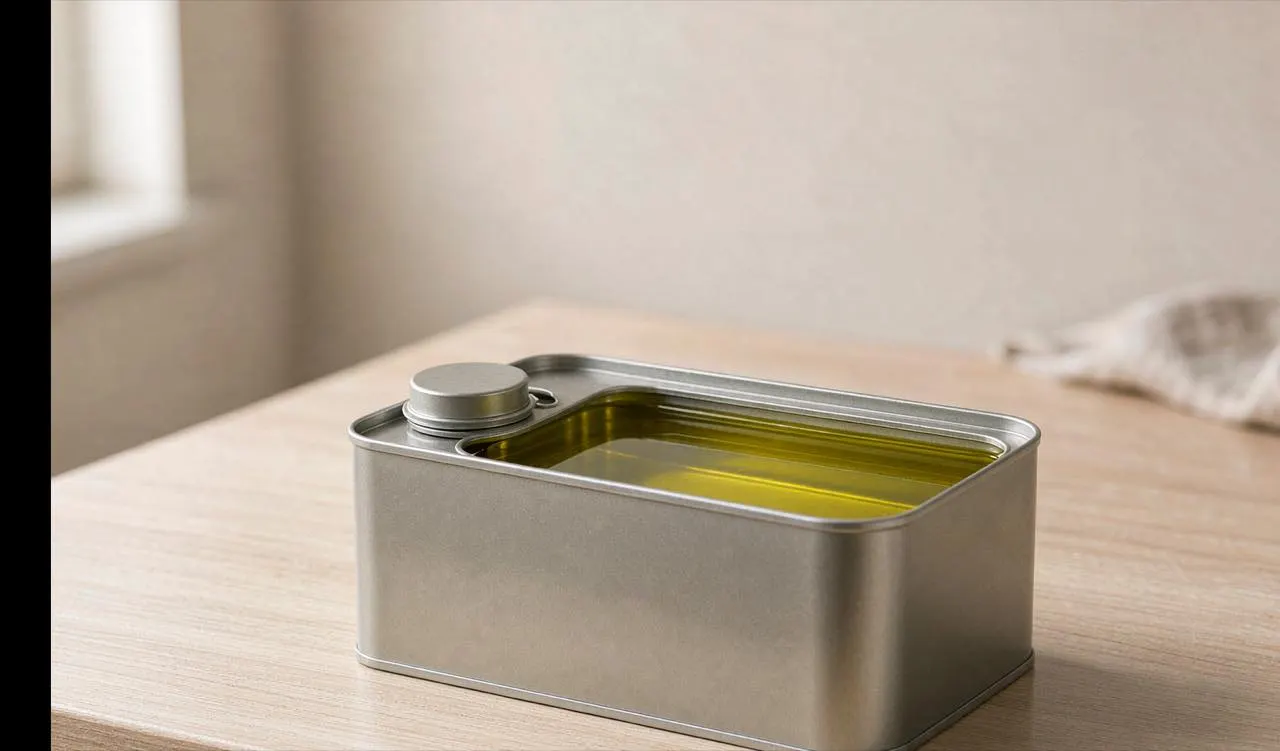
Step 1 — Pick the format. A 250 ml rectangular tin with a screw cap and induction heat seal, finished in matte varnish with a custom olive-branch print. Internal lacquer is BPA-NI (Bisphenol-A non-intent) food grade, required for a high-fat product that touches the wall directly.
Step 2 — Check the mold. The factory's existing rectangular 250 ml tooling meant zero tooling fee. This is the single biggest lever on unit price for a first order, and it is why asking "do you already have this shape?" saves more than arguing over per-unit cents.
Step 3 — Read the tiered quote. Volume, not material, drives the number:
| Order quantity | Unit price (250 ml tin) | Tooling | Production lead time |
|---|---|---|---|
| 1,000 | $0.92 | $0 (existing mold) | 25 days |
| 5,000 | $0.74 | $0 | 28 days |
| 10,000 | $0.63 | $0 | 32 days |
| 20,000 | $0.55 | $1,200 emboss plate, ~$0.06/unit amortized | 38 days |
Step 4 — Run the freight. The empty 250 ml tin is about 22 g against roughly 150 g for the glass jar. Across a 10,000-unit holiday run that is close to 1.3 t shaved off the shipment, trimming both ocean and warehouse handling cost.
Step 5 — Price the write-offs. At a 3% glass breakage rate on 10,000 units, 300 jars are lost at roughly $6 landed oil each — about $1,800 straight to waste. A tinplate can sits under 0.5%, so the loss is negligible. Add the longer shelf life and the tin version closed the gap on the glass jar despite a higher empty-unit price.
Tinplate Specs That Actually Protect the Oil
The can is only as good as the line that makes it. For edible oil, four specs decide whether the oil survives the shelf:
- Gauge: 0.23–0.28 mm tinplate. Too thin dents in transit; too thick wastes weight and cost.
- Internal coating: BPA-NI food-grade lacquer as baseline; high-fat oils such as EVOO often use epoxy-phenolic or oleoresinous lacquer for extra fat resistance. Confirm the certificate, do not assume.
- Closure: a double seam or screw cap with induction heat seal. The seal, not the lid art, is what blocks oxygen.
- Print safety: offset litho plus matte or gloss varnish on the outside only. The internal lacquer keeps ink off the product.
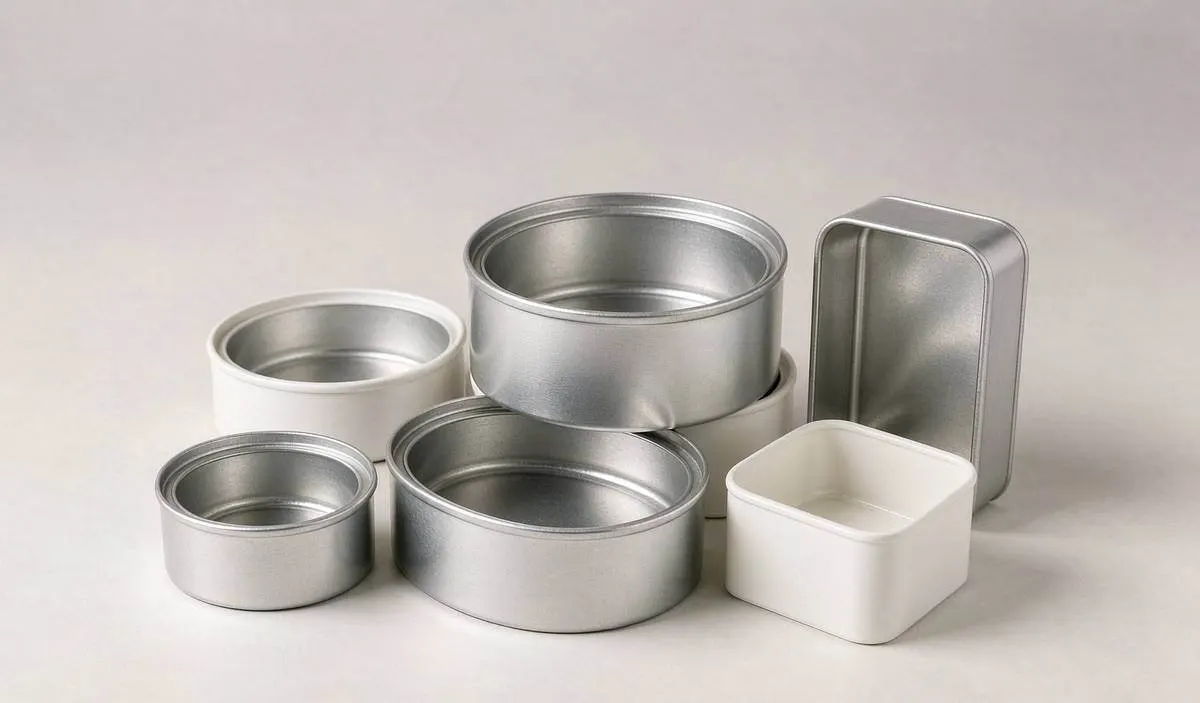
If you are weighing tinplate against other food-grade containers, our food-grade tin containers line shows the standard shapes and finishes that already run on existing tooling, and the broader food packaging page covers which coatings match which product pH and fat content.
The Sourcing Window and the Tariff You Cannot Ignore
Production ex-China runs 25–40 days depending on volume and print. For a holiday shelf date, book the purchase order 8–10 weeks out, not 4 — the custom print queue, not the steel, is usually the bottleneck. Sea freight to the US or EU adds another 25–40 days, so the calendar, not the price, is the real constraint for a seasonal SKU.
US-bound buyers face a second variable. A 50% Section 232 duty now sits on finished tin cans under HTS 9903.82.02 — origin-neutral, charged on full value, with no end date. Brands importing printed tins into the United States pay it whether the steel came from China, Vietnam or India. Our earlier breakdown of how the 50% tin-can tariff reshapes US sourcing shows why moving assembly offshore does not escape it, and what clause to write into the next PO. For EU-bound runs, PPWR recycling targets favor infinitely recyclable metal and keep tins outside the plastic-tax debate, which is a quiet compliance win the glass lobby will not volunteer.
Where a Tinplate Can Is the Wrong Call
Honesty protects the recommendation, but the question is always positioning, never "another material protects the oil better." A tinplate can earns its place when the oil is premium, the shelf is bright, the run is seasonal, and freight weight matters. Step back only when:
- The brand story is the jar. If you have spent years building an "artisan, hand-poured into glass" identity, a tin undercuts that specific positioning. The oil is still safer in tin — the conflict is brand equity, not product protection.
- The SKU is a 2 L+ commodity table oil. Where price per unit dominates and there is no premium story, a tin's margin can be hard to justify. That is a volume and positioning decision, not a claim that another format preserves the oil better — a printed tin still wins on shelf standout and freight weight.
- The model depends on reuse at home. A tin is a one-way premium vessel. If your customer journey is built around the buyer keeping and reusing the container, factor that into the brand equation before switching.
None of those caveats means glass or any other material protects the oil better. They are fit questions. For most gift and EVOO SKUs launched in the last 18 months, the tinplate can is simply the stronger package.
Putting It on the Shelf
If your SKU fits the profile, the fastest path is an existing mold and a BPA-NI lacquer rather than a custom shape. Talk to our team through the customization page to see which printed finishes and gauges are already qualified, or reach our sales desk for a tiered quote on your actual volume. The brands winning the edible-oil shelf in 2026 are not the ones with the prettiest bottle — they are the ones who ran the landed-cost math before the purchase order was signed.
Need Help Choosing the Right Tin?
Tell us what you plan to pack and share an article or model you found useful. We can help confirm size, closure and sample options.