PPWR Has Been Live for Three Months. Here Is What Changed in November 2026.
The EU Packaging and Packaging Waste Regulation (Regulation (EU) 2025/40) has applied since 12 August 2026, and the first hard obligations are already enforced: substance limits on heavy metals and PFAS, the declaration of conformity, technical documentation, and manufacturer marking. Three developments landed in late October and early November 2026 that change the compliance calendar for anyone shipping tin cans into the EU. None of them let you relax. Two push deadlines later than most buyers assumed; one reshapes how Germany handles producer registration. This update tells you what is real, what the new dates are, and what to do before the year ends.
1. The Harmonised Sorting Label Is Not Coming in 2026
Article 12 of PPWR requires a harmonised material-composition label so consumers sort packaging correctly. The European Commission was supposed to adopt the implementing act by 12 August 2026. It did not. Multiple sources, including Clarity, ECONOS, SGS and Hanpak, now confirm the Commission will run a public consultation first and adopt the rules in the second quarter of 2027.
That delay matters because the label becomes mandatory only 24 months after the act enters into force, whichever is later. If the act lands in Q2 2027, the obligation realistically starts in the second quarter of 2029, not 2028. Until then, national schemes such as France's Triman keep running, and there is no point printing an EU sorting pictogram on your tins yet.
The practical takeaway: reserve blank space on your artwork for a future pictogram and a QR code, but do not lock a final design. Collect the material data per SKU now so the label, when it comes, is a print change rather than a data scramble.
| Milestone | Previous assumption | Current status (Nov 2026) |
|---|---|---|
| Implementing act adopted | By 12 Aug 2026 | Expected Q2 2027 after consultation |
| Material-composition label mandatory | From 12 Aug 2028 | Earliest Q2 2029 (24 months post-act) |
| Reusable-packaging label plus QR | Tied to 2028 | From 12 Feb 2029 or 30 months post-act |
| National labels (Triman and equivalents) | Being replaced | Remain valid until the EU label applies |
2. Reusable Packaging Clarified: No Forced Redesign
In a written reply on 29 October 2026, Commissioner Jessika Roswall answered a practical question from the European Parliament: do reusable packs already on the market have to be redesigned just to carry the future label? The answer is no. Packs placed on the market before the new labelling rules apply can keep circulating without a label-specific redesign.
The same reply addressed how to prove rotation counts. You do not need to track every single unit with RFID or a QR code. Operational statistics, inbound and outbound flows, return rates, and loss-rate ledgers, are acceptable evidence that a reuse system actually loops. That is a meaningful cost reprieve for returnable tin systems, where embossed, mono-material cans are already the durable, recirculatable default.
Note the boundary: this is a transitional clarification, not a suspension of PPWR. Existing reuse schemes under Article 26 and Annex VI still have to demonstrate organisation, returns, inspection and reconditioning. It simply means you are not scrapping functional assets to add a marking feature that does not exist yet.
3. Germany Swaps VerpackG for VerpackDG — Act Before 11 December 2026
Germany replaced its Packaging Act (VerpackG) with the new Packaging Act (VerpackDG) on 12 August 2026. The LUCID registration portal remains mandatory; you still cannot place packaging on the German market without it. But the transition has hard dates that tin exporters using a German entity or distributor must respect:
- Changes to existing LUCID registrations must be notified by 11 December 2026.
- Existing system contracts with producers run only until 31 December 2026.
- Fines for PPWR breaches in Germany start on 12 February 2027.
If you ship tin cans to Germany through a distributor or your own entity, confirm the LUCID entry is current before the December deadline. France continues under its AGEC-based EPR system, and the Netherlands runs through Verpact, so the national patchwork is intact even as the EU label is delayed.
4. A Possible One-Tonne-Per-Country Exemption
The Council has proposed an exemption for producers placing less than one tonne of packaging per member state per year. It runs in parallel to the Parliament's micro and small enterprise exemption already written into the regulation. Neither is a free pass on substance limits or the declaration of conformity; they address registration and EPR administrative burden, not the material rules. For low-volume tin exporters, it could remove duplicate filings across countries, but it is not yet final and should not be banked on for 2026 planning.
5. The Do-Now List for Tin Can Buyers
With the label delayed but the substance and DoC rules already live, the work that pays off is preparation, not panic. Four moves:
- Reserve artwork space for a material-composition pictogram and a QR code, without printing either yet.
- Build per-SKU material data — substrate, coating, recycled content, mass — so the future label is a print change.
- Clean green claims now. Vague terms like eco-friendly without proof are a real legal risk under the EU greenwashing ban (Directive (EU) 2024/825) that has applied since 27 September 2026.
- Keep the declaration of conformity and technical file ready per SKU, covering the heavy-metal total limit of 100 mg/kg and the PFAS food-contact limits already in force.
| Action | Why it matters | Deadline |
|---|---|---|
| LUCID registration review (Germany) | VerpackDG transition; fines from Feb 2027 | 11 Dec 2026 |
| Per-SKU material data | Feeds future label and DoC | Ongoing |
| Green-claim audit | Greenwashing ban live since Sep 2026 | Now |
| Hold reorder of compliant tins | Keep supply while artwork is reserved | 30 to 50 days lead |
Reordering Compliant Tins: Indicative Specs
If you are holding reorders while you reserve artwork, the typical specification for a compliant food-grade tin can on existing tooling looks like this. Figures are indicative FOB ranges from a standard B2B tin-can programme and shift with gauge, print and destination.
| Order quantity | Indicative unit price (FOB) | Lead time | Note |
|---|---|---|---|
| 3,000 units | USD 0.32 to 0.55 each | 30 to 35 days | Existing mould, custom litho |
| 10,000 units | USD 0.26 to 0.46 each | 30 to 35 days | Tier 2 volume break |
| 30,000 units | USD 0.21 to 0.39 each | 35 to 45 days | Tier 3 volume break |
| New tooling (any qty) | Plus one-time tooling | 45 to 50 days | Add 15 to 20 days for sampling |
Why Mono-Material Tinplate Stays the Safe Default
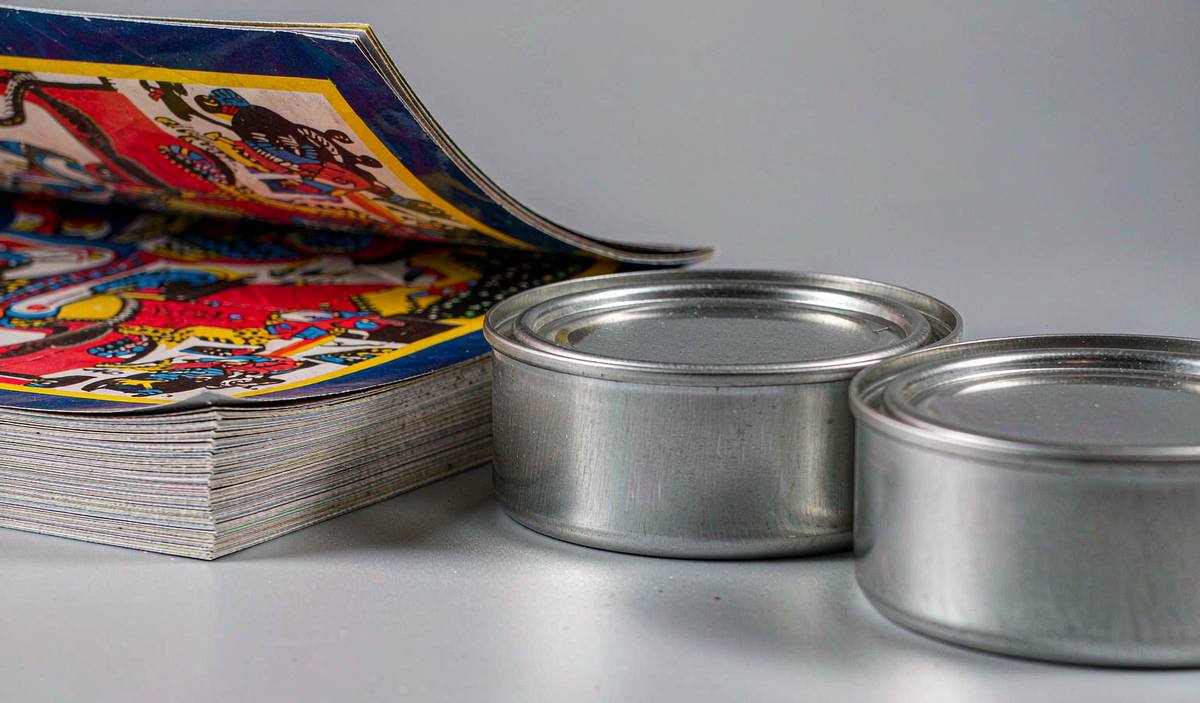
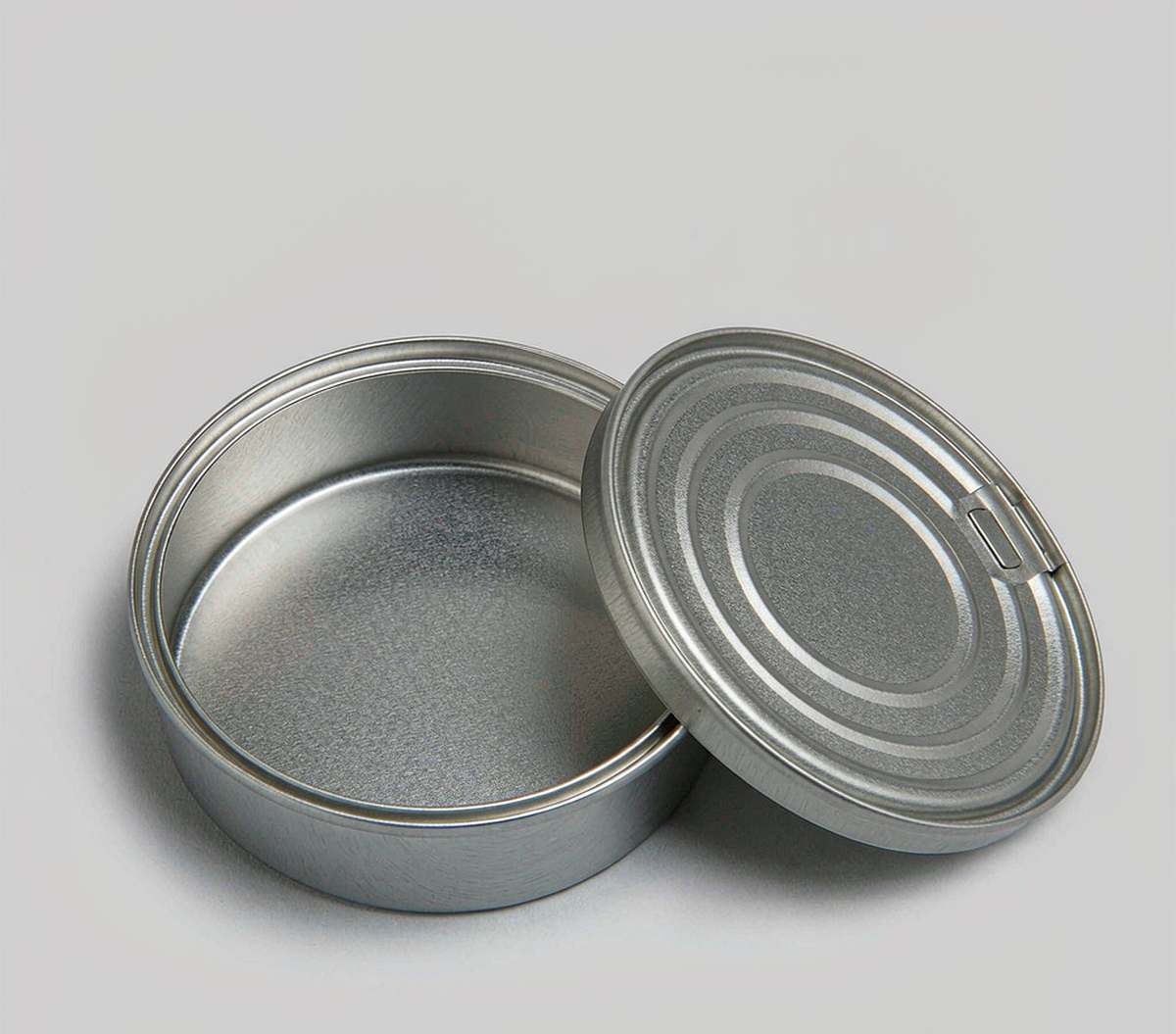
None of these November changes alter the core compliance advantage of tin cans. Tinplate is a single-material steel substrate: it is already 100 percent recyclable, sits outside the plastic recycled-content mandate of Article 7, and documents cleanly under PPWR. As we covered in our explainer on why the recycled-content rule skips metal, the can you specify today stays compliant tomorrow. For food brands, the food-grade tin can remains the structural, barrier and recycling default, and you can see a typical classic round food tin in our catalogue. When you are ready to reorder compliant stock, our customization team turns artwork around on existing tooling.
Conclusion
The November 2026 PPWR picture is quieter than the August panic suggested: the EU label is delayed to 2029, reusable systems get a redesign reprieve, and Germany's VerpackDG is a registration housekeeping task with a December deadline. None of it weakens the case for specifying compliant tin cans now. Do the data and artwork prep this quarter, and the 2027 to 2029 labelling wave becomes a non-event rather than a fire drill.
Need Help Choosing the Right Tin?
Tell us what you plan to pack and share an article or model you found useful. We can help confirm size, closure and sample options.