Why PPWR's Recycled-Content Panic Doesn't Touch Your Tin Can
Since the EU Packaging and Packaging Waste Regulation (PPWR, Regulation (EU) 2025/40) became directly applicable on 12 August 2025, a specific fear has spread through procurement teams: that every pack they ship into the EU must now contain a fixed percentage of recycled material, and that missing the number means a blocked shipment or a fine of up to 6% of global annual revenue. For brands packaging in food-grade tin packaging, that fear is largely misplaced — and understanding precisely why saves both budget and lead-time panic.
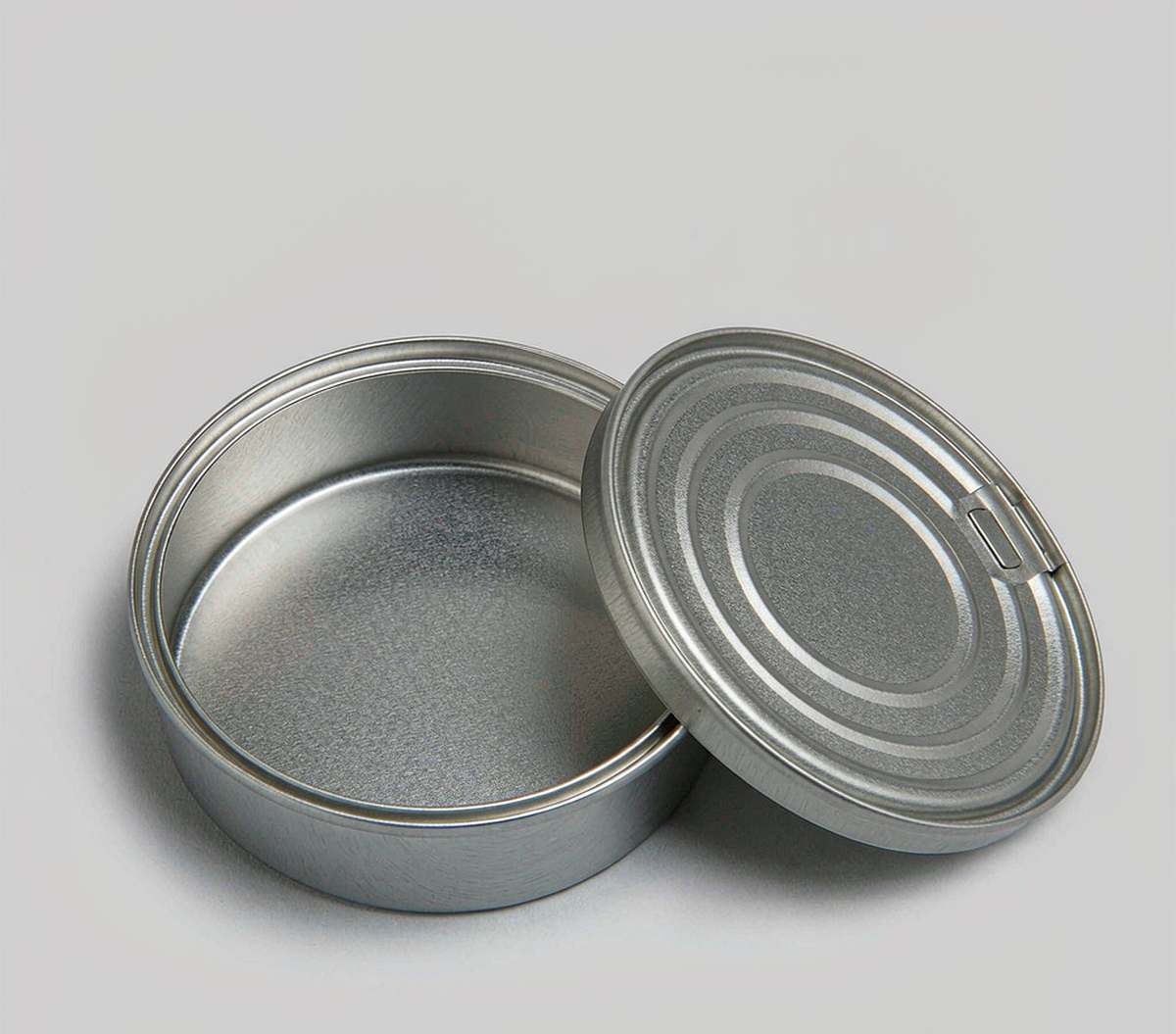
The recycled-content obligation in Article 7 of the PPWR applies to plastic packaging only. A mono-material tinplate can — steel with a micro tin coating, no plastic window, no PVC liner — falls completely outside the scope. That single clause is why a classic round food tin can be fully compliant on day one without a single gram of post-consumer resin inside it.
What Article 7 Actually Requires — and What It Excludes
Article 7 sets minimum recycled-content thresholds for plastic. The binding numbers, as they stand for contact-sensitive and other plastic formats, are:
- Contact-sensitive PET: 30% recycled content
- Other PET: 10%
- Single-use PET drink bottles: 30%
- All other plastic packaging: 35%
None of these percentages reference metal. Tinplate is composed of steel and tin — both infinitely recyclable, neither a "plastic" under the regulation's definitions. The European Commission is still running a call for evidence (open until 16 September 2026) on how to calculate and verify recycled-plastic content, with implementing methods due by 31 December 2026 and effective three years after that or from 1 January 2030, whichever is later. That entire workstream exists because plastic needs a verification machinery that metal never required.
Metal vs Plastic vs Glass vs Aluminium: The Real Compliance Gap
The cleanest way to see the advantage is side by side. The table below contrasts what each primary packaging material must satisfy under PPWR's recycled-content and recyclability rules.
| Material | Recycled-content quota (Art. 7) | Actual recycling rate (EU) | PPWR 2030 grade | Mono-material status |
|---|---|---|---|---|
| Tinplate (steel + tin) | None — exempt | ~84.5% (Germany 94.3%) | A — top tier | Already mono-material |
| Aluminium | None — exempt | ~62.4% | A — top tier | Already mono-material |
| Glass | None — exempt | ~76% | A — top tier | Already mono-material |
| Plastic (PET, PP, PS) | 10%–35% mandatory | ~48.4% | B/C — must improve | Penalised if not recyclable-by-design |
The recovery figures for metal come from industry sourcing that places global tinplate recycling at 84.5% (versus aluminium at 62.4% and plastic at 48.4%); some suppliers cite up to 99% technical recyclability for steel, with a carbon footprint roughly 75% lower than plastic. The practical point for buyers: a mono-material tin already sits at the highest recyclability grade the regulation recognises, with no recycled-input quota to engineer around and no PCR resin to source. That gap is not just regulatory — survey data indicates around 71% of consumers will pay roughly 20% more for packaging they read as genuinely recyclable, so the grade-A metal story also travels at the point of sale.
What Metal Buyers Still Must Do — The 2027–2030 Timeline
Being exempt from the recycled-content quota is not the same as being exempt from PPWR. Three obligations still land on metal packaging, and missing them is exactly how otherwise-compliant brands get caught out:
- Digital product passport / QR label — mandatory from 12 August 2027. Every pack needs a scannable route to its compliance data, so the 2027 deadline is a label change, not a material question.
- Single EU recycling symbol — from 12 August 2028. National marks including France's Triman are replaced by one harmonised icon across all member states.
- Recyclability performance grades A/B/C — from 1 January 2030. Only A/B/C-rated packaging may be placed on the market; grade C is phased out by 2038.
These are recyclability and labelling rules, not recycled-input rules. Our breakdown of Sweden's zero-threshold PPWR rule and the 4% turnover fine shows how aggressively member states are already enforcing the documentation side — metal is not a shield from that, only from the resin quota.
The Cost Arithmetic: Documenting Mono-Material vs Chasing PCR Resin
The reason the exemption matters is money. A plastic pack that must hit 35% recycled content typically pays a recurring resin premium and carries a verification burden for the life of the product. For metal, the compliance cost is concentrated in one-time documentation, not material reformulation:
| Compliance line item | Typical cost (EU-bound tin) |
|---|---|
| Declaration of Conformity (DoC), per SKU | $1,500 – $3,000 |
| Lab migration / heavy-metal testing, per item | $800 – $2,500 |
| EPR registration, per member state | €200 – €2,000 |
| EU authorised representative, per year | $800 – $3,000 |
Contrast that with a PCR plastic programme, where you additionally absorb a recycled-resin price delta on every unit forever and carry chain-of-custody risk on scarce food-grade recycled feedstock. The mono-material tin's advantage is that the spend is a one-time documentation event, not a recurring material surcharge — and it removes a supply dependency that plastic buyers increasingly worry about.
A Real Sourcing Scenario: Re-Packaging a DTC Snack Line
Take a direct-to-consumer snack brand shipping 40,000 units a year into Germany and France across three SKUs. Two options land on the table:
- Option A — rPET tub at 35% recycled content. Material cost runs 8–12% above virgin plastic, the recycled feedstock is on allocation, and the brand must keep a chain-of-custody file proving every batch's PCR percentage or face a national enforcement fine of up to 4% of turnover. EPR registration alone spans two countries at €200–€2,000 each.
- Option B — mono-material tinplate tin. No recycled-input quota, no resin allocation risk. The brand pays the documentation set above once (roughly $3,900–$10,500 across three SKUs and two states), lands at recyclability grade A, and gains a premium shelf look that independent data links to higher repeat purchase.
The brand picks B, briefs a supplier for a 2,000-unit pilot at a $0.45–$0.90 per empty tin price point, and books a 30–35 day production window. The same mono-material logic already clears other tests cheaply — our EDC tin classification guide shows how a plain steel shell also passes toy-safety testing without a plastic blend, because there is simply less chemistry to certify.
How to Brief Your Supplier for a PPWR-Ready Tin
Recycling grade A starts at the drawing board, not the compliance desk. Five asks cover most buyers:
- Specify a mono-material build — steel body, steel lid, no PVC liner, no PET window. This is what earns the automatic exemption and the top recyclability grade.
- Request chromium-free passivation and a documented coating that meets food-contact limits (EU 1935/2004, LFGB, FDA 21 CFR 175.300) with total heavy metals at or below 100 mg/kg.
- Confirm the factory can issue a DoC retained for 5 (single-use) or 10 (reusable) years and submit it in an understandable language within 10 days of an authority request.
- Plan the QR passport now so the 2027 deadline is a label change, not a redesign of the tooling.
- Set MOQ and lead time realistically: standard custom runs sit at 1,000–3,000 units with 30–35 days after sample approval, and reusing an active mould can trim both the entry quantity and two to three weeks of tooling.
Get a Mono-Material Tin Quote
If you are rethinking a plastic pack ahead of the 2027–2030 PPWR milestones, request a PPWR compliance check with your target size, coating and annual volume, and we will confirm whether a mono-material tinplate spec already clears the bar — no recycled-resin scramble required, and no compromise on the shelf presence that drives reorders.
Need Help Choosing the Right Tin?
Tell us what you plan to pack and share an article or model you found useful. We can help confirm size, closure and sample options.