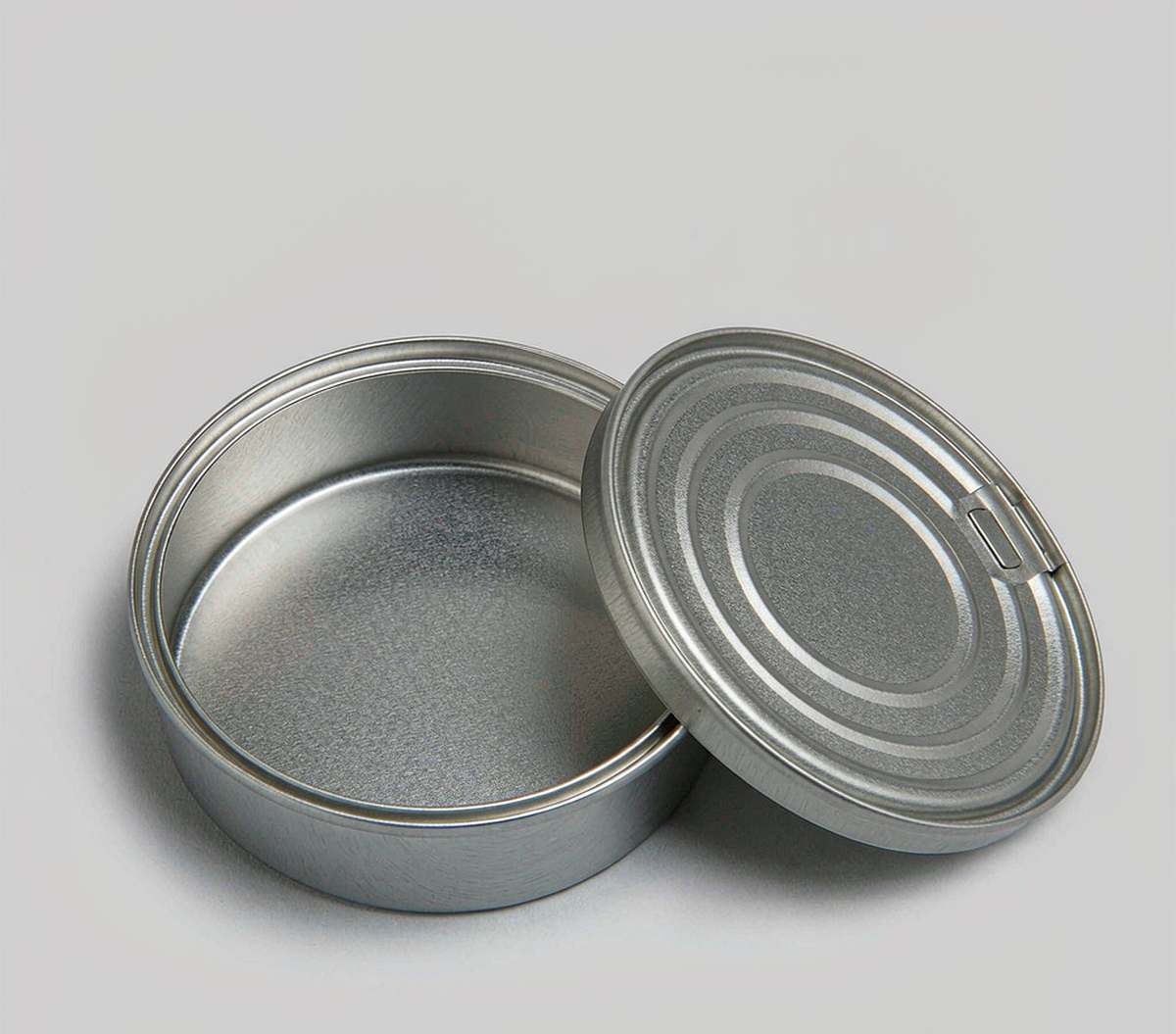
Why PPWR Hits Tin Can Exporters Differently
The Packaging and Packaging Waste Regulation (Regulation (EU) 2025/40) rewrote the rulebook for everyone placing packaged goods on the EU market. For B2B tinplate can exporters, the structural news is good: metal packaging is infinitely recyclable and already sits at the top of the EU material hierarchy. The procedural news is harder — PPWR layers new documentation, reuse targets, and substance limits on top of the old Directive 94/62/EC framework that many small suppliers never had to engage with directly.
If you are a small workshop or trading company shipping tin cans to Germany, France, the Netherlands, or any EU member state, the single most useful thing to know in 2026 is this: micro-enterprise status can shield you from several obligations, but it does not remove your duty to place safe, conforming packaging on the market. This article walks through exactly what is exempt, what is not, and how to assemble a Declaration of Conformity (DoC) that survives an audit.
What Counts as a Micro-Enterprise?
Under PPWR and the accompanying European Commission guidance published on 19 October 2026, a micro-enterprise is defined consistently with EU Recommendation 2003/361: fewer than 10 employees and an annual turnover or balance sheet total not exceeding €2 million. Both thresholds must be met. A two-person sourcing agency with €1.8M turnover qualifies; a nine-person factory turning over €3M does not.
The exemption is about who you are, not what you ship. A micro-enterprise still benefits from simplified obligations even when selling through a larger EU importer, because the regulation recognizes that compliance cost is disproportionate for the smallest actors.
What Micro-Enterprises Are Exempt From
Based on the EC factsheet of 19 October 2026, micro-enterprises placing packaging on the market enjoy relief on several fronts. The table below summarizes the practical split.
| Obligation under PPWR | Applies to Micro-Enterprise? | Practical Effect for Tin Can Exporters |
|---|---|---|
| Extended Producer Responsibility (EPR) registration & fees | Partially exempt via importer | Your EU customer usually handles EPR; you supply supporting data only |
| Reuse / refill targets (Article 25+) | Exempt | No reuse quota forced on your tin can lines |
| Minimum recycled-content certificates | Exempt | No rPET-style mandate for steel (steel uses different metrics) |
| Labelling & QR traceability (Article 11) | Exempt for the smallest | No mandatory digital product passport at your tier |
| Substance restrictions (heavy metals ≤100 mg/kg, PFAS ban) | NOT exempt | You must still prove tinplate lacquer & coating compliance |
| Declaration of Conformity (DoC) | NOT exempt | You remain responsible for safe, conforming packaging |
The two items at the bottom of the table are where small exporters get caught out. Exemption from paperwork does not equal exemption from safety.
Angle 1 — The DoC Is Your Real Insurance Policy
The Declaration of Conformity is the document that ties your tin cans to the substance limits in PPWR. For tinplate packaging the headline limits are:
- Heavy metals (lead, cadmium, mercury, hexavalent chromium) — total concentration in the packaging or packaging component must not exceed 100 mg/kg. This is carried over from Directive 94/62/EC and remains fully in force.
- PFAS — PPWR prohibits PFAS in food-contact packaging. For tin cans the risk sits in the internal lacquer or varnish, not the steel itself. A BPA-NI (BPA non-intent) Gen-2 coating is the current industry standard.
A workable DoC for a small tin exporter contains six elements: (1) your company identity, (2) the product description and HS code, (3) the applicable regulation and article references, (4) the conformity assessment method (typically supplier test reports plus material declarations), (5) the notified body if any, and (6) a signed statement of responsibility. Keep the underlying test reports for at least 10 years — that is the window an EU authority can request them.
This is also where your food-grade tin can specifications matter. Documenting the lacquer system, steel temper, and coating supplier up front turns a vague "it's compliant" into a defensible file.
Angle 2 — Procurement Data That Proves Conformity
Auditors do not trust adjectives; they trust numbers. When you build a DoC for tinplate cans, anchor it with real procurement evidence. The table below reflects typical 2026 small-batch sourcing parameters from our production lines.
| Specification | Small Batch (MOQ) | Unit Price (FOB) | Lead Time |
|---|---|---|---|
| One-piece tin can, 250 ml | 3,000 pcs | $0.42 – $0.58 | 20 – 25 days |
| Seamless candle tin, 90 mm | 100 – 200 pcs | $0.20 – $0.81 | 12 – 18 days |
| Printed food tin, 500 g | 5,000 pcs | $0.65 – $0.95 | 25 – 35 days |
| BPA-NI lacquer upgrade | No MOQ add | +$0.03 – $0.05 / unit | +3 – 5 days |
Pairing these figures with a coating supplier's PFAS-free certificate closes the loop: you can demonstrate both the commercial terms and the substance compliance in one dossier. For buyers in the food packaging segment, this dossier is frequently the difference between a sample approval and a rejected RFQ.
Worked Example — A DoC for a 500 g Food Tin
To make this concrete, consider a 500 g printed food tin ordered by a German importer. The micro-enterprise exporter records: company name and EORI number; product description "round tinplate food container, HS 7310.21"; applicable regulation "Regulation (EU) 2025/40, Art. 5 and Art. 12"; conformity method "supplier material declaration plus third-party lab report (SGS, September 2026)"; and a signed responsible-person statement. The attached lab report shows total heavy metals at 38 mg/kg and a PFAS not-detected result. That single folder — declaration plus evidence — is exactly what an EU border or market-surveillance inspection expects to see. Without it, even a perfectly safe tin can can be held at the border while the file is assembled.
The worked example also shows why the procurement table above matters: the coating upgrade line ("BPA-NI lacquer, +$0.03–$0.05 per unit") is the very item the lab report must certify. Buying the cheapest uncertified lacquer to save pennies per can is the fastest way to invalidate your DoC and jeopardize the whole shipment. Substance compliance is not a line item to trim; it is the foundation the document rests on.
Common Mistakes Small Exporters Make
- Assuming "small" means "unregulated." Micro-enterprise relief is narrow; substance limits and DoC duties survive.
- Using a generic lacquer certificate. A 2021 BPA-free statement does not cover the 2026 PFAS prohibition. Request a current, dated declaration.
- Forgetting the importer handoff. If your EU customer manages EPR, put that allocation in writing so responsibility is unambiguous.
Building Your DoC Checklist
Here is a printable one-page checklist you can adopt today:
- Confirm micro-enterprise status (headcount <10, turnover ≤ €2M).
- Collect material declarations for steel coil and lacquer from each supplier.
- Obtain a dated PFAS-free + heavy-metals test report (≤100 mg/kg total).
- Record coating system (e.g., BPA-NI Gen-2 epoxy alternative) and supplier name.
- Draft the DoC with the six elements above; sign and date it.
- Archive reports for 10 years; share a copy with your EU importer.
Need help structuring custom compliance documentation for your next order? Our customization team can pre-fill the dossier templates against your specific tin can specs, and you can always reach us directly for a conformity review before shipment.
PPWR Compliance Timeline for 2026–2030
Micro-enterprises should still track the phase-in dates even where exempt, because your EU customers are not. Key 2026–2030 markers:
- 2026: Substance limits (heavy metals, PFAS) fully applicable; EPR modernization underway in member states.
- 2027–2028: Reuse and refill targets begin applying to larger operators; packaging minimisation rules phase in.
- 2029–2030: Recycling and reuse rate uplift; deposit-return systems mature.
For a tin can exporter, the immediate 2026 actions are substance compliance and DoC readiness. The later targets mostly affect your customers, but knowing them helps you advise buyers and win trust.
Related Reading
If you are reworking your 2026 sourcing strategy alongside compliance, see our earlier breakdown on one-piece tin can MOQs and AI-assisted sourcing, which pairs procurement planning with the regulatory backdrop covered here.
Need Help Choosing the Right Tin?
Tell us what you plan to pack and share an article or model you found useful. We can help confirm size, closure and sample options.