Why Spice Brands Are Reaching for Tin in 2026
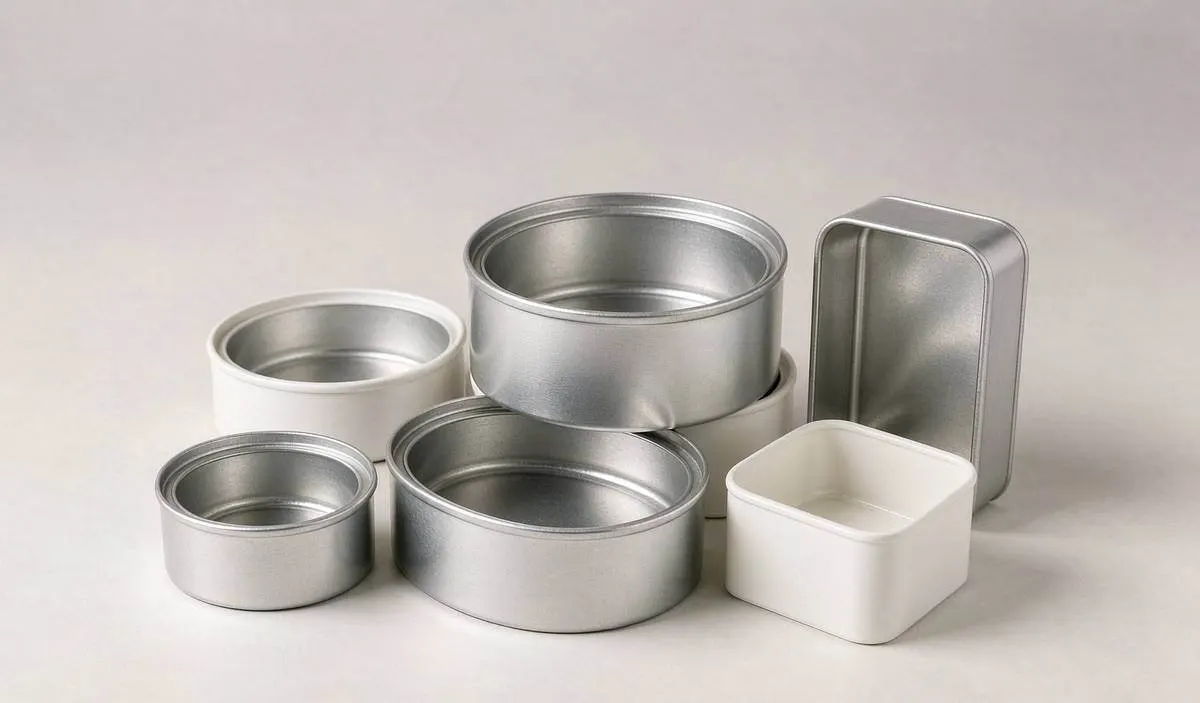
The specialty tin-can market is valued at roughly USD 683 million in 2026 and is projected to grow at a 4.1% CAGR through 2036 (Future Market Insights, via Accio). What is driving that growth is not volume — it is premiumization. Spice and seasoning brands are moving away from flimsy pouches and fragile glass jars toward rigid, reusable metal tins that justify a higher retail price and survive the kitchen drawer for years. For a B2B buyer, the appeal is just as concrete: a single tin can doubles as the primary package and the long-term storage vessel, cutting the brand's total packaging footprint. The broader metal food-can market is on track to reach USD 15 billion in 2026, up roughly 7% year on year as brands shift to sustainable rigid formats (Accio / Econobuildings), and spices are one of the fastest-premiumizing corners of that category.
This guide walks through the three specification decisions that actually move the needle in 2026 — the shaker insert, the base, and the compliance file — and then lays out the procurement math so you can price a private-label run with confidence.
1. The Mono-Material Shaker Insert Is Now the Default
The biggest design shift this year is the move from plastic sifter inserts to all-metal shaker tops. A mono-material tinplate lid with laser- or die-cut dispensing holes keeps the entire package in one recyclable stream. Under the EU Packaging and Packaging Waste Regulation (PPWR, (EU) 2025/40, in force since 12 August 2026), mono-material metal constructions earn the highest recyclability grades, while a multi-material closure with a plastic sifter can drag a package down a tier. For a spice brand selling into Europe, specifying an all-metal shaker is the single cheapest compliance decision you can make.
The table below contrasts the three shaker approaches buyers actually specify in 2026.
| Shaker type | Material mix | PPWR recyclability | Typical unit-cost add |
|---|---|---|---|
| All-metal sifter lid | 100% tinplate | Top grade (mono-material) | included / +$0.02–0.05 |
| Plastic insert + metal lid | tin + PP/PE | Lower tier (mixed) | baseline |
| Butterfly dual-flap cap | tin + polymer hinge | Mid tier | +$0.03–0.08 |
The cost delta is trivial — often a few cents — yet the recyclability gap is large. Specifying the all-metal version also removes a plastic-component REACH and PFAS review from your dossier.
2. Magnetic Bases and Clear Windows: The Organization Play
The second 2026 trend is the magnetic base. A small tinplate disc welded or adhered to the bottom lets a spice tin stick to a fridge door or a steel spice rack, turning the package into a permanent fixture rather than a disposable container. Paired with a clear window — a punched aperture in the lid or body covered by a thin food-grade film — the tin becomes a visual inventory system: the cook sees the paprika without opening it.
Private-label magnetic spice tins typically run a MOQ of 500–1,000 units with retail prices of USD 2–5 and brand margins of 50–70% (industry sourcing data). That economics only works because tinplate prints beautifully and survives handling — the tin is the product as much as the spice inside. A tin that lives on the fridge door also extends brand exposure long after the first fill is gone — every time the cook reaches for it, your logo stays in front of them, which is why private-label programs treat the tin as a low-cost permanent billboard.
3. The 2026 Procurement Math
Most factories quote spice tins against a standard 0.20–0.23 mm tinplate body with a BPA-NI (BPA-non-intent) internal coating, a clear-window option, and a magnetic base. B2B pricing clusters between USD 0.29 and 1.18 per unit depending on volume and print complexity, with a common MOQ of 3,000 pieces per shape (Tinpak, Accio). If you run multiple SKUs, most suppliers let you split a 3,000-piece mold order across flavors at 1,500 pieces each.
| Order volume (per shape) | Unit price (printed, shaker lid) | Production lead time | Reorder rate observed |
|---|---|---|---|
| 3,000 – 9,999 | $0.55 – 0.85 | 30 – 35 days | 25 – 30% |
| 10,000 – 49,999 | $0.40 – 0.60 | 25 – 30 days | 30 – 35% |
| 50,000+ | $0.29 – 0.45 | 20 – 28 days | 35 – 40% |
Two levers protect your budget. First, use an existing mold instead of commissioning new tooling: that skips 30–40 days of engineering and saves USD 2,500–5,000 in upfront tooling. Second, consolidate the print run — combining three SKUs into one 9,000-piece order lands you in the better price band versus three separate 3,000-piece runs. Add 30–40 days of ocean freight from South China and your true door-to-door clock is roughly 65–75 days, so a Q1 2027 restock must be locked before the Lunar New Year 2027 (26 February) factory shutdown freezes capacity in late January.
4. The Compliance File You Must Assemble
Food-contact spice tins cross three regulatory regimes. For the EU, you need a Declaration of Conformity under PPWR, REACH confirmation (heavy metals lead, cadmium, mercury and hexavalent chromium total ≤ 100 mg/kg; PFAS within the 25 ppb / 250 ppb / 50 ppm limits), and a food-grade coating declaration. For the US, FDA 21 CFR 175.300 extractables and LFGB-style migration data satisfy most buyers. Crucially, because tinplate is mono-material metal, it carries no recycled-content mandate under PPWR Article 7 — unlike plastic packaging — so your documentation is simpler than a composite pouch's.
Specify a BPA-NI internal coating (Gen-2 styrene-free polyester is the 2026 export default) and request the coating and ink heavy-metal test reports up front. Reputable suppliers provide tinplate, printing-ink and finished-goods test reports dated within the year.
5. Why Tinplate Beats the Alternatives for Spices
Spices are vulnerable to light, moisture and oxygen — the three enemies of volatile oils. The table below shows why a tin can is the recommended substrate for a premium spice line.
| Substrate | Light barrier | Moisture / oxygen barrier | Mono-material recyclability | Verdict for spices |
|---|---|---|---|---|
| Tinplate can (recommended) | Total | Excellent | Yes — top PPWR grade | Best shelf life + compliance |
| Glass jar | Total | Excellent | Yes, but heavy / fragile | Good barrier, high breakage & shipping cost |
| Plastic tub | Partial | Good | No — mixed, PCR mandate | Lighter but weaker barrier + compliance load |
| Composite pouch | Partial | Good | No — multi-layer | Low cost, low recyclability grade |
The tin can leads on every axis that matters for a premium spice brand: full light block-out, an airtight seal that preserves aroma, and a mono-material body that sails through PPWR. It is the substrate we recommend for any brand that wants the tin to outlive the first fill and keep working as kitchen storage.
Your RFQ Checklist
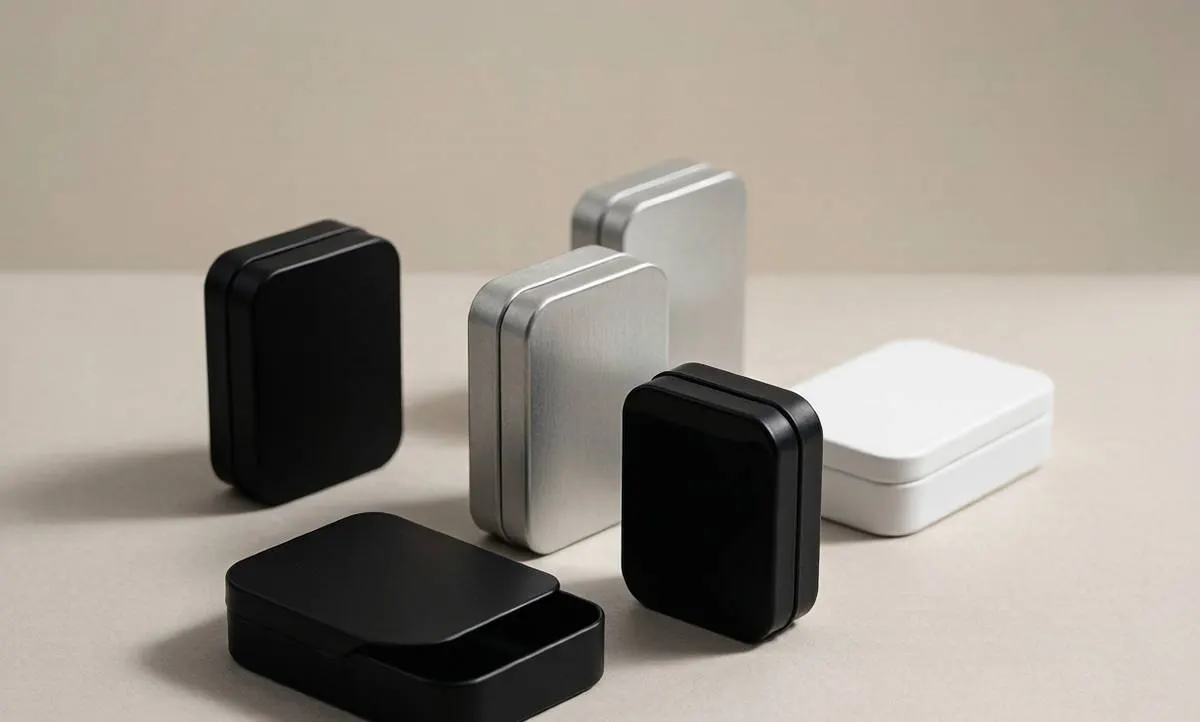
Before you request a quote, lock these specifications: body gauge (0.20–0.23 mm), internal coating (BPA-NI, Gen-2), lid type (all-metal shaker vs sifter), window (yes/no), base (magnetic or standard), print (CMYK or Pantone), and target MOQ. Share the list with a supplier that already holds food-grade and REACH documentation, and ask for their existing mold catalog so you can skip tooling entirely. For shaped gift collections, a luxury gift tin body can carry a curated spice set, while a standard classic food tin handles everyday oregano and paprika. See our food packaging industry page for more format ideas, read our latest on can-to-can recycling and EPR maths, and start a custom tin project with our team.
Need Help Choosing the Right Tin?
Tell us what you plan to pack and share an article or model you found useful. We can help confirm size, closure and sample options.