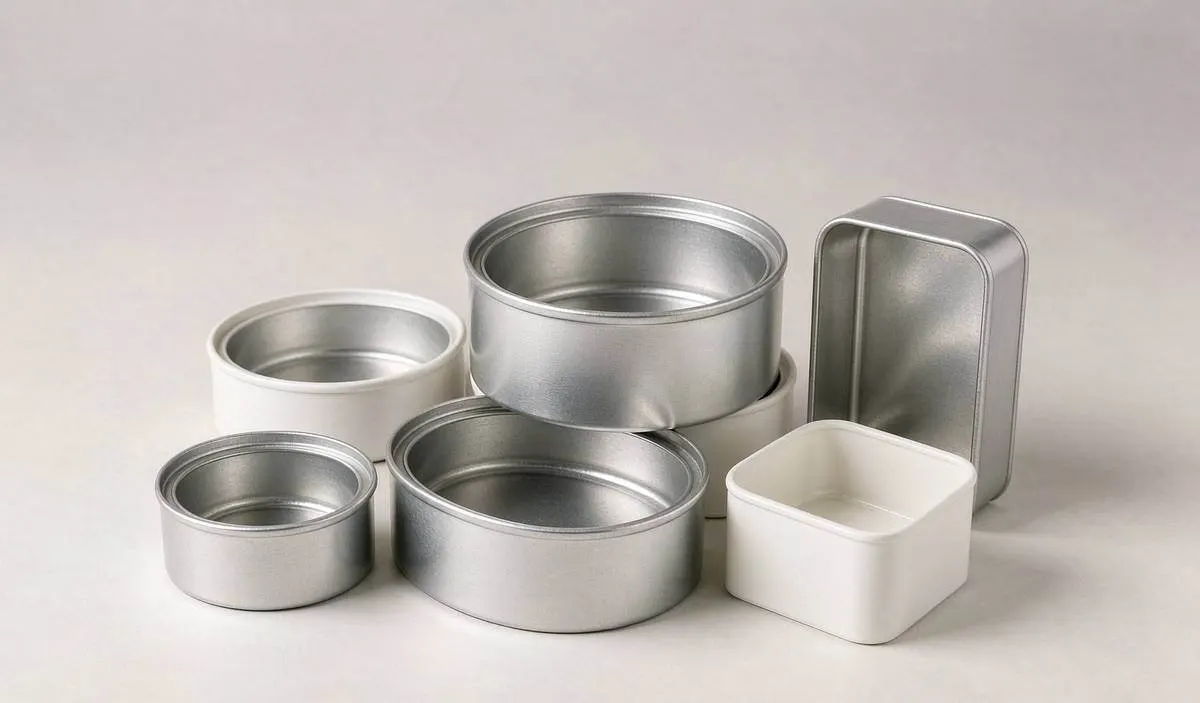
Most packaging is described as "recyclable." A tin can actually is — and in 2026 the proof is no longer a slide deck. Tata Steel Nederland collected 120 million kilograms of used food and beverage tins for remelting this year, a fourfold jump from the 30 million kg it processed in 2024. That is the can-to-can loop running at industrial scale: the steel can you fill today can return to a shelf as a new can within roughly six months. For procurement teams already juggling PPWR, CBAM and Scope 3 reporting, that single fact should change how you specify and cost tinplate.
What "closed loop" really means for a steel tin can
A tin can is about 99% steel carrying a microscopic tin coating to stop corrosion. Because steel is ferromagnetic, a used can is yanked out of mixed household waste by a magnet — no hand-sorting, no polymer-separation plant, no consumer error. The shredded "tin can" scrap drops into an electric-arc furnace, the tin floats off and is reclaimed for solder and coatings, and the steel is rolled into fresh coil. The material does not downcycle. It is remelted and reshaped indefinitely, and even after ten recycling cycles the material loss stays below 2%. That is precisely why the steel sector calls the can "the only packaging that truly closes the loop" — and it is the reason the Netherlands now recovers ~95% of its steel packaging, the highest rate in Europe.
Six months, not six years
The loop is fast because the demand side is structural. Tata Steel's 2026 "can deal" ties ten scrap firms across the Netherlands, Belgium, Germany and the UK into a single feedstock pipeline, and the company's target is 30% scrap use in steel production by 2030, up from 17% in 2022. A collected soup tin can become coil, become a new can, and reach a filling line in about half a year. Contrast that with plastic, which loses quality every pass and sits at a 31% recycling rate, or glass, which is heavy, fragile and costly to remelt at scale. The tin can's loop is operational now, not a 2030 aspiration.
The hard numbers you can drop into a report
Recycled tinplate is not just greener on a brochure. The energy and emissions maths are concrete enough to file in an ESG or Scope 3 submission:
| Metric | Steel tin can | Aluminium | Plastic (PET) | Glass |
|---|---|---|---|---|
| Recycling rate (EU / China) | 90–95% | 60–70% | 31% | 68% |
| CO₂ per kg of packaging | 0.8 kg | 1.3 kg | 1.5 kg | 1.2 kg |
| Energy in recycling step | 25% of virgin steel | 4% of virgin* | High (degrades) | High |
| Downcycles before loss | None — infinite | Purity falls | 3–5 cycles | Fragile, costly |
*Aluminium's low remelt energy is real, but its primary smelting is far more carbon-intensive than steel's; the comparison above is for the recycling step alone. Per tonne of recycled tinplate you save roughly 1.5 tonnes of iron ore, 0.4 tonnes of coke and 2.3 tonnes of CO₂ versus making steel from ore. When a buyer asks why steel and not plastic, those three figures are the answer, and they are auditable rather than asserted.
Where the EPR maths bite: your grade sets your fee
Under the EU PPWR (Regulation (EU) 2025/40, fully applicable since 12 August 2026), Extended Producer Responsibility fees are modulated by recyclability grade. Packaging that sorts and remelts cleanly pays less; packaging that contaminates the stream pays more. The regulation assigns recyclability performance grades A to C from 2030, with only A and B permitted from 2038. A mono-material tin can that reaches grade A is, by its construction, in the cheapest EPR band. The part most buyers miss is that a pack's recycling rate is no longer a soft "sustainability" line on a deck — it is a line item on the compliance invoice.
The CBAM tie-in: cleaner scrap, fewer certificates
The loop also blunts CBAM. Embedded carbon is what you pay CBAM certificates on, and recycled steel carries a fraction of the emissions of ore-based steel. As the EU free-allocation phase-out lifts the CBAM factor from 2.5% in 2026 toward 100% in 2034, the carbon cost of a tin can built on virgin steel climbs every year, while a can on a documented recycled-content coil stays flat. Specifying closed-loop tinplate is therefore a hedge, not just a green story — the same certificate maths we walked through in the Q4 2026 sourcing playbook applies, only now the input changes.
Procurement data: specifying recycled-content tinplate
With the loop proven, a buyer can — and increasingly should — request tinplate carrying a declared recycled-content ratio and a recycling-rate certificate from the mill. Typical B2B terms for recycled or standard tinplate food cans in 2026:
| Spec | MOQ | Unit price (FOB) | Lead time | Tiered note |
|---|---|---|---|---|
| Standard 0.21–0.25 mm tinplate food can, 200–500 ml | 3,000 pcs | $0.18–0.42 | 25–35 days | −8% at 10k, −15% at 50k |
| Recycled-content-declared tinplate (mill cert) | 5,000 pcs | $0.22–0.48 | 30–40 days | +$0.02–0.04 for closed-loop doc |
| Existing-mold reprint (no tooling) | 1,000 pcs | $0.15–0.35 | 15–20 days | −40% tooling vs new mold |
| Custom emboss + matte lacquer, food grade | 3,000 pcs | $0.28–0.60 | 35–45 days | artwork proof 7–10 days |
The last column is the key: requesting closed-loop documentation adds only a few cents per unit, and using an existing food-tin mold removes tooling cost altogether. For a brand assembling an ESG dossier, that is the cheapest compliance insurance on the shelf.
Four questions to put in every RFQ
To convert the loop into a procurement advantage, build these into the brief:
- Recycling-rate certificate — can the mill show the collection-and-remelt rate for the grade, and is the can magnetic-separable with no bonded plastic liner?
- Recycled-content declaration — what scrap ratio is in the coil, and is it traceable to a verified program such as Tata's "can deal"?
- Mono-material confirmation — is the can a single steel stream (tinplate body plus steel end) with no mixed polymer parts that would push it below PPWR grade A?
- Coating compliance — does the interior lacquer meet food-contact rules and carry a Declaration of Conformity, so the can is compliant today and recyclable tomorrow?
Why the tin can wins the loop outright
Glass is recyclable but heavy, breakable and expensive to ship; aluminium's can-to-can loop is genuine yet its primary smelting is carbon-heavy and its recycling purity degrades; plastic downcycles after a few passes at a 31% rate. The single-material tin can is the only one that pairs infinite recyclability with a magnetic sort that already works in every municipal stream. It is why the loop is real today instead of a target on a slide.
The 2026 sourcing takeaway
Recycling is no longer a footnote on a tin can spec — it is the mechanism that sets your PPWR EPR fee, your CBAM exposure and your Scope 3 number at once. Specify mono-material tinplate with a declared recycled-content ratio, ask for the remelt certificate, and you turn a compliance cost into a documented asset. Pair it with the PPWR picture in our recycled-content guide, and for a tailored food-tin program, talk to our customization team about closed-loop documentation on your next order.
Need Help Choosing the Right Tin?
Tell us what you plan to pack and share an article or model you found useful. We can help confirm size, closure and sample options.