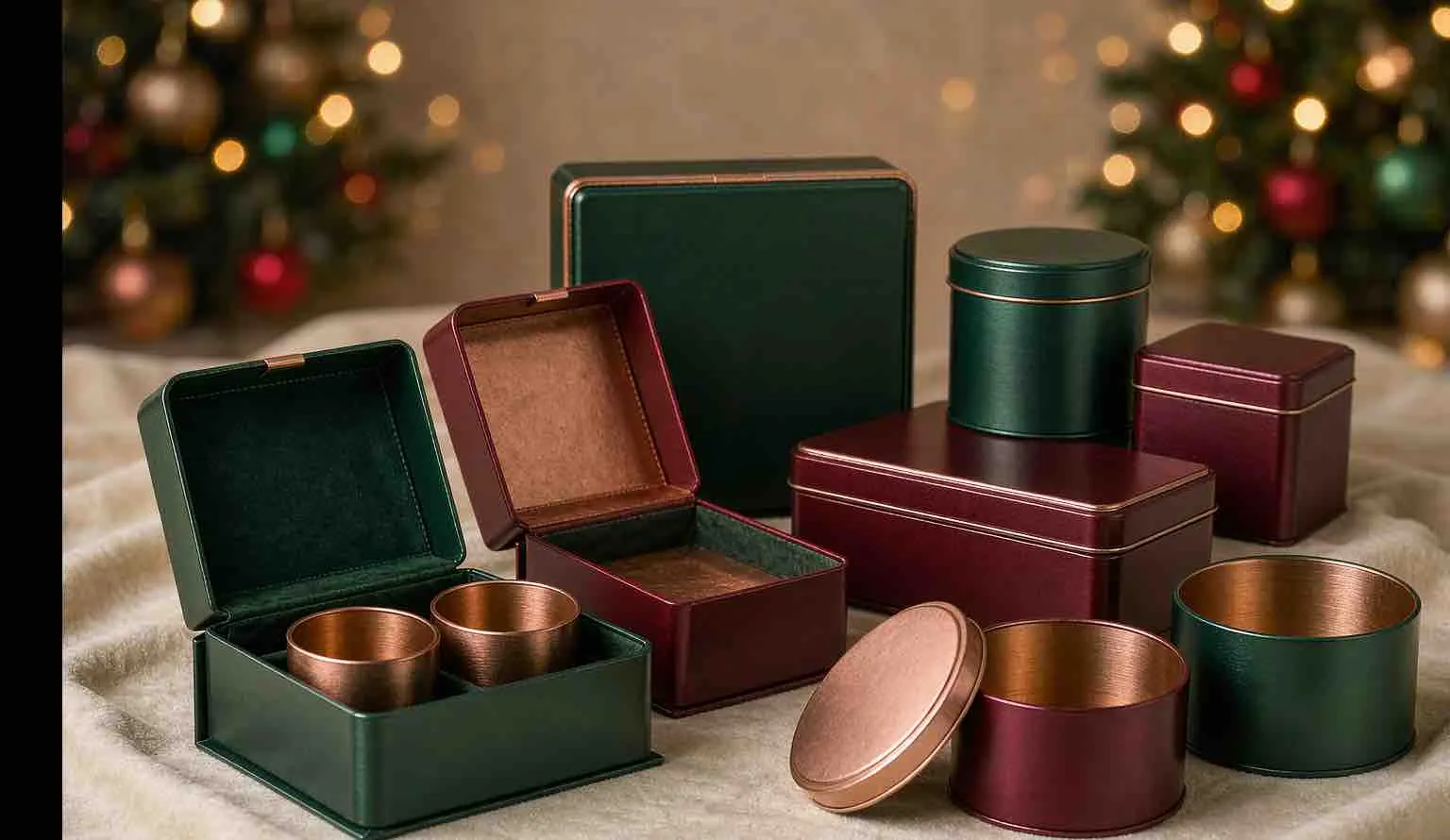
Why the 2026 UK Holiday Tin Palette Looks Different
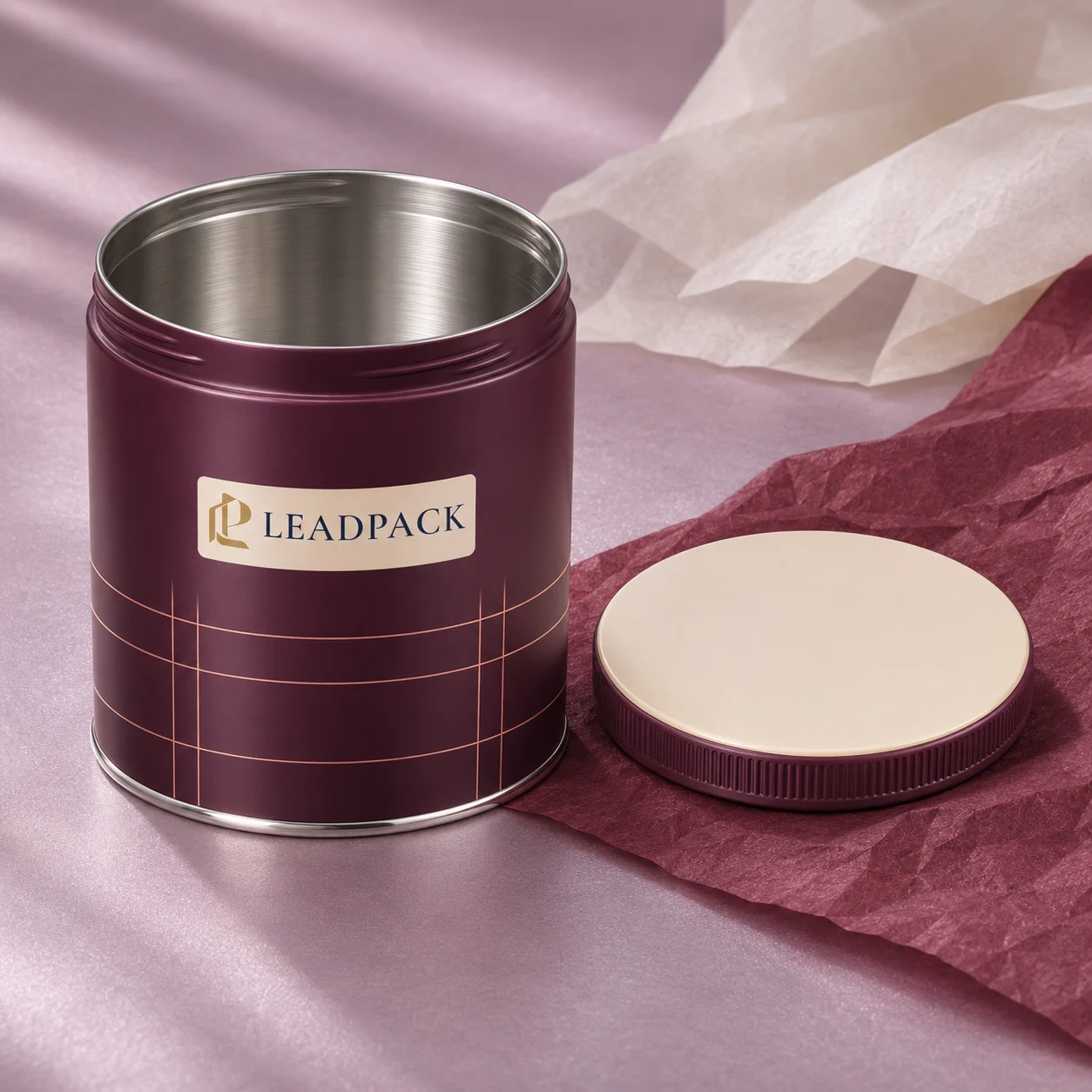
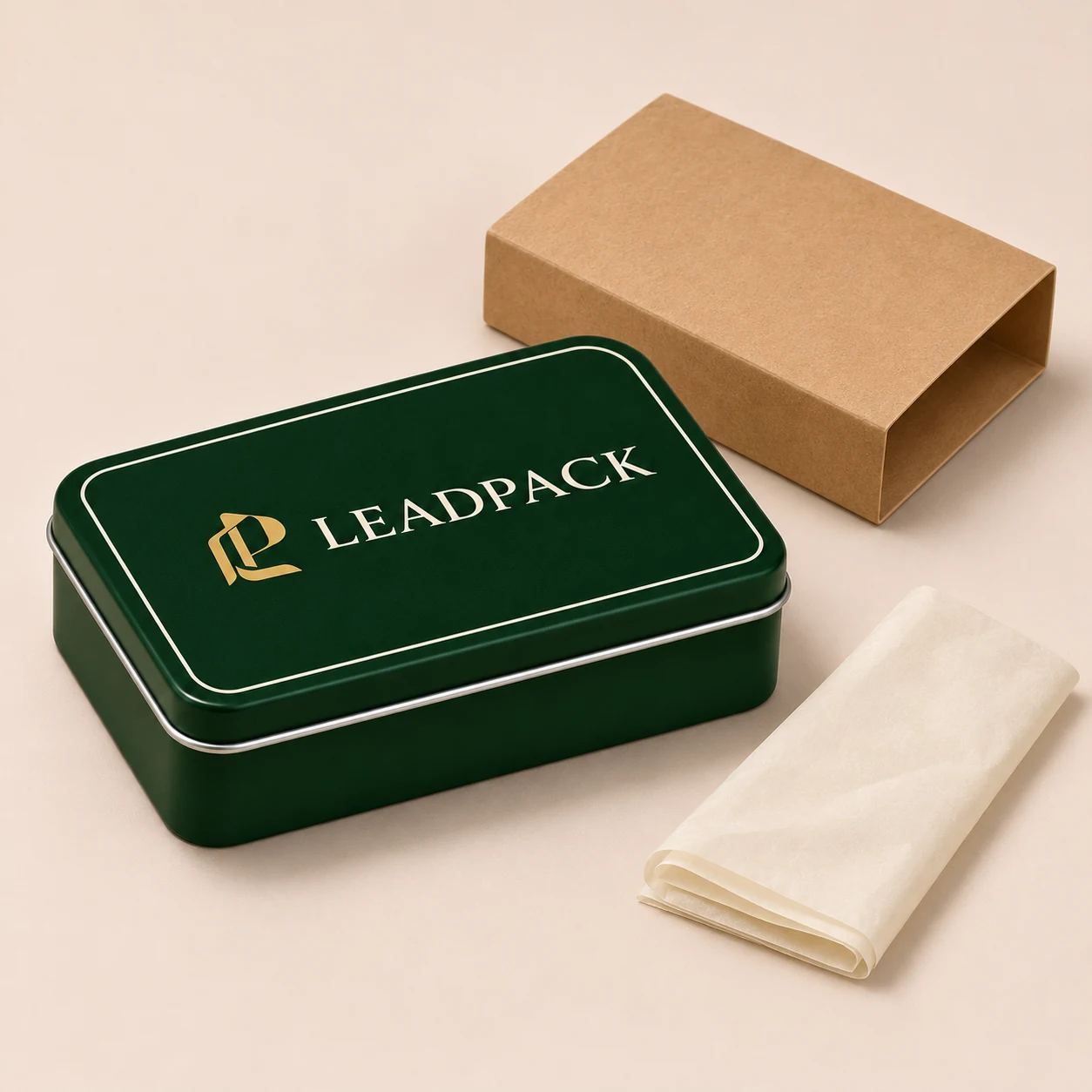
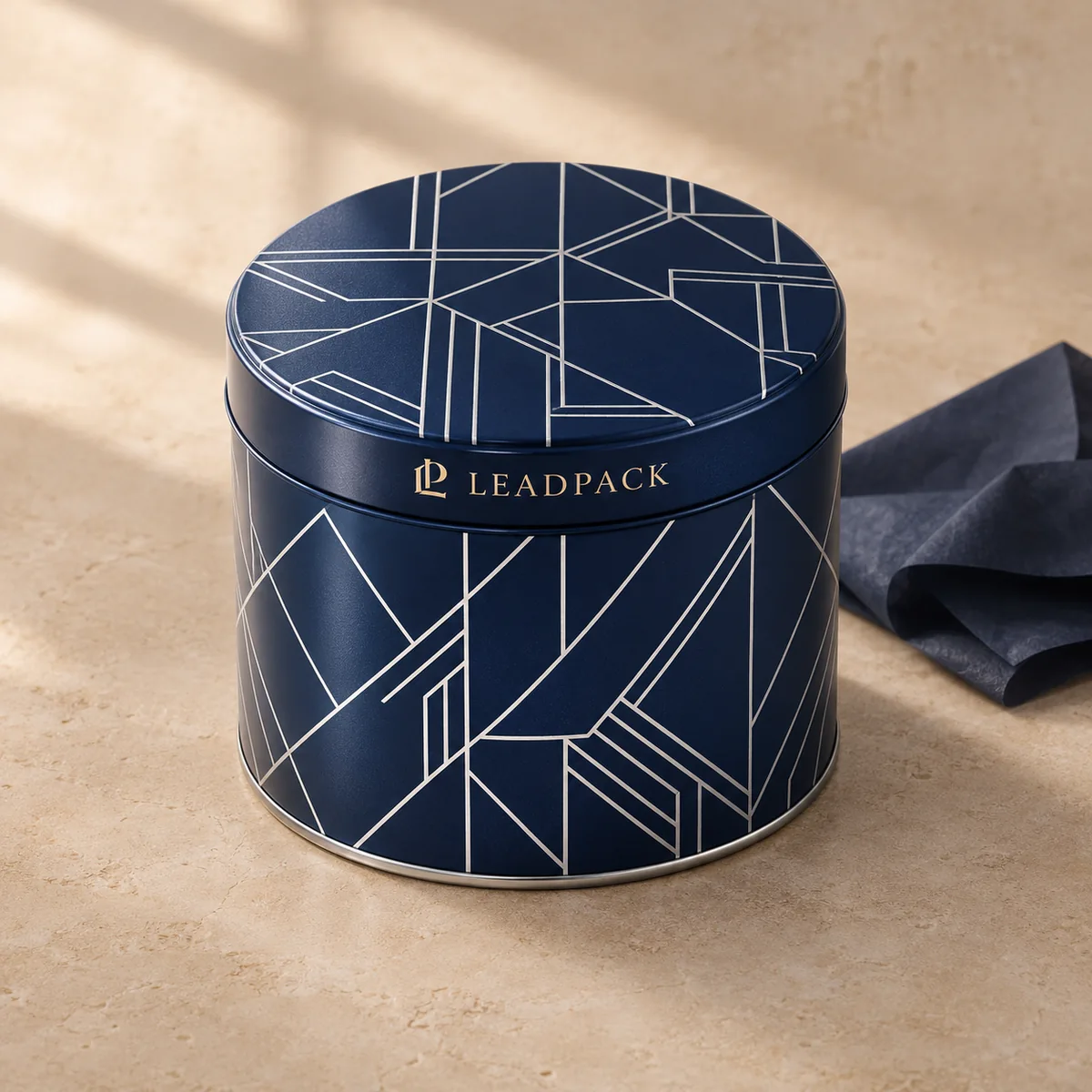
For British brands, the Christmas quarter often represents 30–50 percent of annual revenue, and the packaging is the first decision a shopper makes at the shelf or in an unboxing video. This year the safest seasonal choice — classic red and gold — has become the riskiest. Retailers and DTC brands now treat that combination as dated, which means gift tin packaging that lands in UK warehouses this autumn needs to look noticeably different from the previous cycle. The palette that is replacing it is deep forest green, oxblood burgundy, midnight blue and warm cream, accented with rose gold or brushed copper foil rather than bright yellow gold.
The Three Finishes That Define This Season
The shift is not only about colour. Three finishes are dominating 2026 holiday tins:
- Magnetic-closure rigid tins and boxes. A hinged or lift-off lid with a concealed magnet gives the satisfying click that reads premium on video and in hand. Whisky, chocolate, tea and candle brands are all moving toward magnetic boxes for their holiday SKUs.
- Brushed copper and rose gold foil. These replace high-shine yellow gold. They photograph well under Christmas tree lights and feel heritage-led rather than novelty-led.
- Soft-touch matte varnish over dark base colours. A forest green tin with matte varnish and a single copper-foil logo often looks more expensive than a busy multi-colour print, and it prints more reliably at volume.
For food-led holiday programs — biscuits, chocolates, nuts, preserves — a holiday food tin in this colour family with a food-grade BPA-NI coating is the format most UK buyers are asking for this quarter.
MOQ, Pricing and Lead Times for Custom Holiday Tins
Design trends only matter if you can still produce and ship in time. The 2026 calendar is unforgiving:
- Production: 30–35 days for standard shapes after approved sample; 45–55 days for fully custom dies.
- Sampling: 10–14 days for a physical pre-production sample — essential for dark colours, because monitors rarely match how forest green or burgundy print on real metal.
- Sea freight to the UK: 30–40 days. Suppliers need orders placed by 20 September to hit UK warehouse dates around mid-October. After that you are looking at air freight at 3–5× the cost, or missing the season.
- Air freight window: viable until roughly 15 November, but it will erase margin on most tins under £8 retail.
On pricing, a mid-size rectangular holiday tin with magnetic closure, foil logo and paper insert typically lands at $1.80–$2.80 per unit at MOQs of 1,000–3,000. Larger formats or set boxes with multiple inserts move toward $3.50–$5.50. Existing moulds drop the entry MOQ to 500–1,000 and shave 2–3 weeks off tooling. For a full breakdown of volumes and shapes, see our guide to custom Christmas gift tins.
The Compliance Layer You Cannot Skip
Design is what sells the tin; documentation is what lets it cross the border. Any holiday tin bound for the EU or UK this season needs to arrive with a PPWR-compliant Declaration of Conformity, heavy-metal and PFAS test data, and — for food-contact tins — evidence of BPA-NI or Gen 2 polyester coating under the new GB 4806.10-2025 and EU BPA limits.
There is also a new carbon-data dimension. The CBAM verifier registry opened on 1 September 2026, which means EU-bound steel and aluminium products — including tinplate packaging — will soon need independently verified emissions data. The firm that helped your supplier build the monitoring plan cannot be the same firm that verifies it. If your 2026 holiday program ships to the EU after January, this is no longer a back-office task; it is part of the unit price.
How to Brief Your Manufacturer for a 2026 Holiday Tin
A strong brief separates a fast, accurate quote from a three-week delay. Include these five items:
- Pantone references, not screen grabs. Forest green and burgundy shift heavily under print. Specify Pantone Coated values for the base colour and foil.
- Closure type. Magnetic hinge, slip lid or plug lid? Magnetic closures add roughly $0.25–$0.45 per unit but drive the premium perception.
- Insert and fit. Paper pulp, foam or velvet-finish insert — and whether the product sits in one piece or a multi-item set.
- Finish hierarchy. Choose one hero finish (foil, embossing or spot UV) and keep the rest restrained. Over-finishing is the most common reason a design looks cheaper in production than it did in mockups.
- Market and launch date. Say UK, EU or both, and confirm the 20 September sea-freight cutoff. This determines whether you use an existing mould or pay for air freight.
Get a 2026 Holiday Tin Quote Before the Sea-Freight Window Closes
UK holiday tin design has moved from red-gold noise to forest-green quiet luxury, and the production calendar is down to its final sea-freight weeks. If you are briefing a biscuit, tea, candle or corporate gift tin program for the UK or EU, request a design review with your target MOQ, finish and launch date, and we will confirm which existing moulds can deliver your palette before the 20 September cutoff.
Need Help Choosing the Right Tin?
Tell us what you plan to pack and share an article or model you found useful. We can help confirm size, closure and sample options.