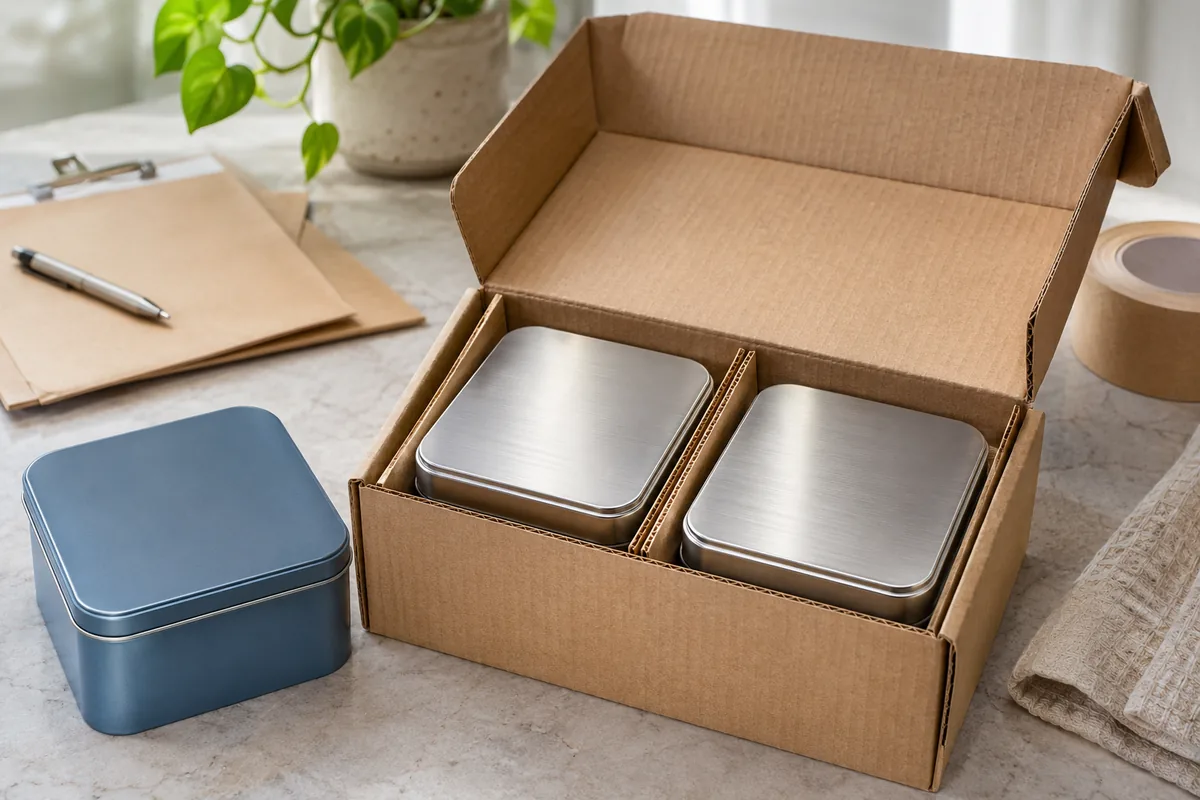
The Clock Is at 68 Days — and It Is Ticking on Paper, Not on Metal
On 30 December 2026, the EU Deforestation Regulation (EUDR, Regulation (EU) 2023/1115) moves from delay to enforcement for large and medium operators. For packaging buyers, the date has a sharper meaning than the seven commodity headlines suggest: it is the day paper and paperboard packaging either clears customs with a due-diligence statement or does not clear at all. A mono-material tin can — printed directly, with no paper label, paperboard insert, or cardboard sleeve — carries zero wood-derived fibre and therefore sits outside that obligation entirely. This article breaks down why tinplate is the cleanest EUDR answer for tea, spice and gift brands, what the regulation actually requires of fibre-based packs, and the procurement maths for switching before the window shuts.
What EUDR Regulates — and What It Ignores
EUDR prohibits placing seven commodity groups on the EU market unless they are proven deforestation-free after 31 December 2020: cattle, cocoa, coffee, palm oil, rubber, soy and wood. The trap for packaging teams is that "wood" pulls paper and paperboard (customs heading HS 48 — folding cartons, card inserts, labels, secondary boxes) into scope. If a pack contains virgin wood fibre, the operator must lodge a Due Diligence Statement (DDS) in the EU's TRACES system, attach plot-level geolocation coordinates (latitude and longitude to at least four decimal places), and hold legality evidence for the country of harvest. Large and medium operators owe this from 30 December 2026; smaller operators get until 30 June 2027, though retailers and platforms are already pushing suppliers to comply early. The practical result is that the packaging buyer, not only the product brand, becomes accountable for fibre evidence the moment a paper component crosses the EU border.
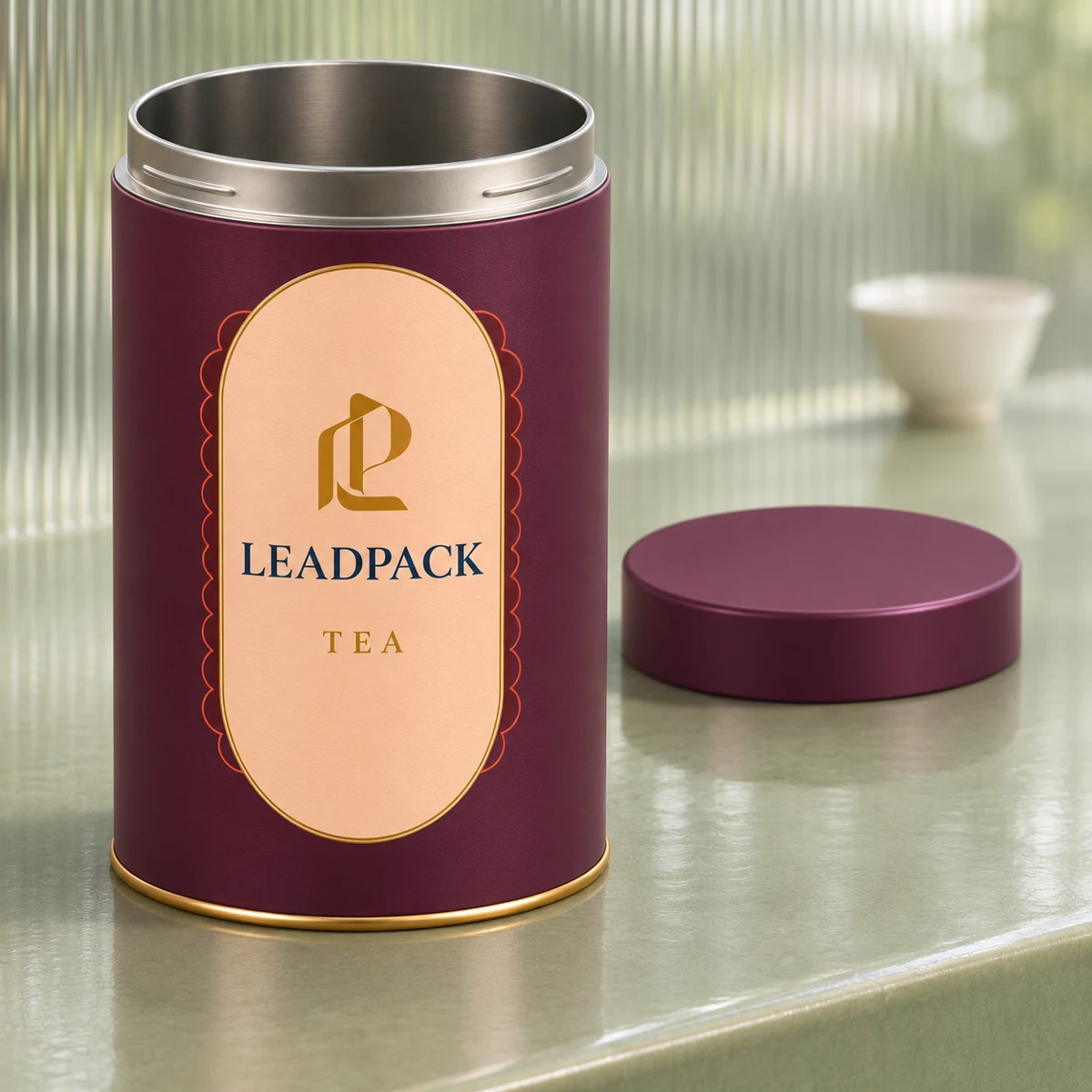
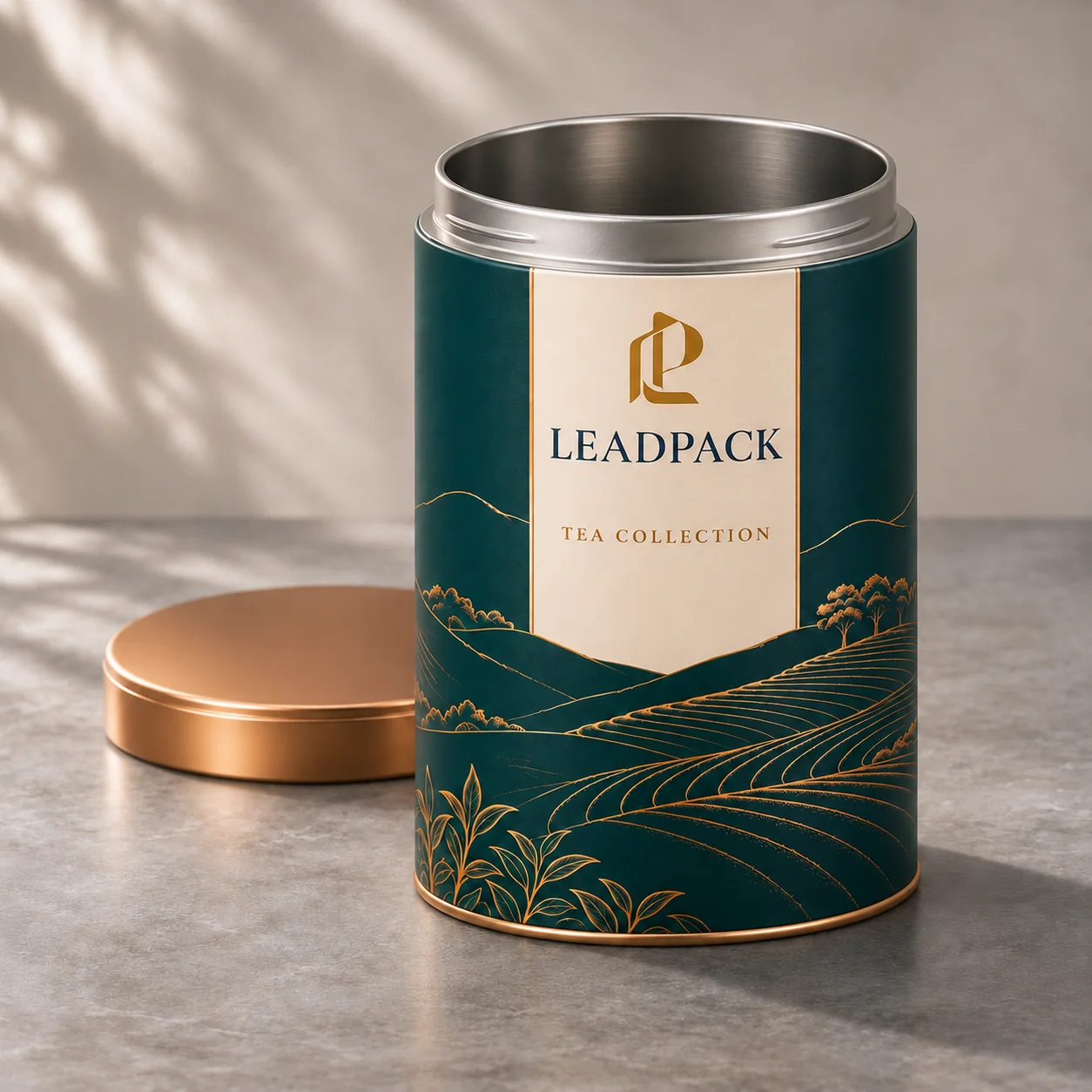
The decisive detail is the material, not the tariff code. Tinplate is steel. A single-material tin can with direct lithographic printing — no paper label, no paperboard liner, no cardboard sleeve — contains no wood-derived fibre at all. It is not a "wood-derived product", it requires no DDS, and it faces no EUDR border check on that basis. The regulation simply does not see it.
The Paper-Packaging Trap, Quantified
The comparison below is not about aesthetics. It is about where the legal burden lands on 30 December 2026.
| Pack material | EUDR exposure | What you must prove | 2027 verdict |
|---|---|---|---|
| Mono-material tinplate can (direct print) | None | Nothing — no wood fibre present | Exempt; recommended |
| Paperboard carton / card insert / paper label | Full | Plot-level GPS, DDS in TRACES, legality proof | Heavy ongoing burden |
| Composite pack (paper plus plastic or foil) | Partial | Map every gram of virgin fibre | Avoid unless 100% recycled |
| Glass jar | None (no wood fibre) | Nothing | Exempt but heavy and fragile — not for export |
| Wooden crate or wooden gift box | Full | GPS plus DDS | Avoid |
Two escape hatches exist for fibre packs: the 13 July 2026 delegated act confirms that packaging travelling with the product it protects (the shipper around a tin, the carton around a cereal box) is exempt as packing material, and a box made entirely from post-consumer recycled paper is outside scope. But a mixed pack — say 80% recycled board with 20% virgin pulp — still owes full traceability on that remaining 20%. For a brand that wants the burden gone, removing the fibre is simpler than auditing it.
The Real Cost of a Paper-Based Programme
For a paper or composite pack, EUDR is not a one-time form. Every affected production run needs geolocation data traced back to forest plots, a DDS reference number lodged before the goods move, and five years of chain records. The penalty for getting it wrong is up to 4% of EU annual turnover, plus seizure of goods and exclusion from public procurement. An FSC certificate is no longer enough: FSC covers roughly 60 to 70 percent of EUDR's requirements, but the remaining gap — plot-level coordinates, deforestation-free proof, and the DDS itself — is exactly the part enforcement checks. Brands that have built a PPWR data file can reuse the supplier-declaration layer, but the geographic evidence is new work.
Freight timing makes the 68-day window unforgiving. A shipment leaving an Asian factory in late October does not reach EU customs until December. If it arrives without a valid DDS reference number, it may never enter the market — potentially an entire production run lost, not a late delivery. The maths favours a material change now over a documentation scramble later.
Procurement Maths for Switching to Mono-Material Tin
Moving a paper-based tea, spice or gift SKU to a direct-print tin can is a reorder, not a redesign, when an existing mould is used. Lead times below assume current tooling; a brand-new shape adds four to six weeks of tooling on top.
| Specification | MOQ | Unit price (USD) | Lead time | Notes |
|---|---|---|---|---|
| Standard 100 to 300g tea or gift tin | 3,000 | 0.35 to 0.80 | 30 to 45 days | Existing mould, CMYK print |
| Premium embossed gift tin | 5,000 | 0.90 to 2.50 | 35 to 50 days | Deboss or emboss, matte finish |
| Magnetic-base private-label tin | 500 to 1,000 | 0.60 to 1.50 | 25 to 40 days | Lower MOQ for test runs |
| Airtight double-lid tea tin | 3,000 | 0.45 to 1.10 | 30 to 45 days | Food-grade, BPA-NI lacquer |
With more than 2,000 existing moulds in the typical library, most briefs skip tooling entirely, which removes both the cost and the lead-time risk. The same order also satisfies the packaging's other 2026 obligations: tinplate needs no recycled-content calculation under PPWR Article 7 (that rule applies only to plastic), and a food-grade, BPA-NI interior already meets the migration limits buyers ask about. For tea and gift programmes specifically, our luxury tea tins and geometric gift tins are built on this mono-material logic. For a brand already importing tin, the switch is a specification change on the next purchase order rather than a fresh supplier qualification.
Three Reasons Tin Is the Cleanest EUDR Answer
First, it is a legal exemption, not a paperwork workaround: no wood fibre means no DDS, no TRACES entry, no 4% penalty exposure. Second, it stacks with the other 2026 rules rather than fighting them — tinplate's infinite recyclability and the absence of any plastic-recycling mandate under PPWR keep the pack compliant on two fronts at once, and an industry page on tea packaging lays out the same logic for the category. Third, the tin does not disappear after opening: it becomes a storage jar and a small, permanent billboard for the brand, which is the opposite of a year-stamped paper carton that looks stale by February.
Your 68-Day Action List
- Audit every SKU for HS 48 (paper or paperboard) components — labels, inserts, sleeves, secondary boxes.
- For packs that cannot be 100% recycled paper, move the primary container to a direct-print mono-material tin using existing tooling.
- Request the supplier's PPWR declaration of conformity and food-contact certificates regardless — EUDR exemption does not remove those duties.
- Lock production before the Chinese New Year 2027 shutdown (6 February 2027, Year of the Goat): Asian capacity tightens for roughly six weeks, and 30 to 45 day lead times plus ocean freight mean orders placed after mid-November arrive late.
Our previous breakdown of mono-material compliance for spice tins shows the same exemption working on a different category. If you want the mould and finish matched to your product, start a customization request now — the 68-day window closes on 30 December, and the freight that leaves after it is the freight that gets stopped.
Need Help Choosing the Right Tin?
Tell us what you plan to pack and share an article or model you found useful. We can help confirm size, closure and sample options.