Why Refillable Cosmetic Tins Are Winning the 2026 Packaging Shift
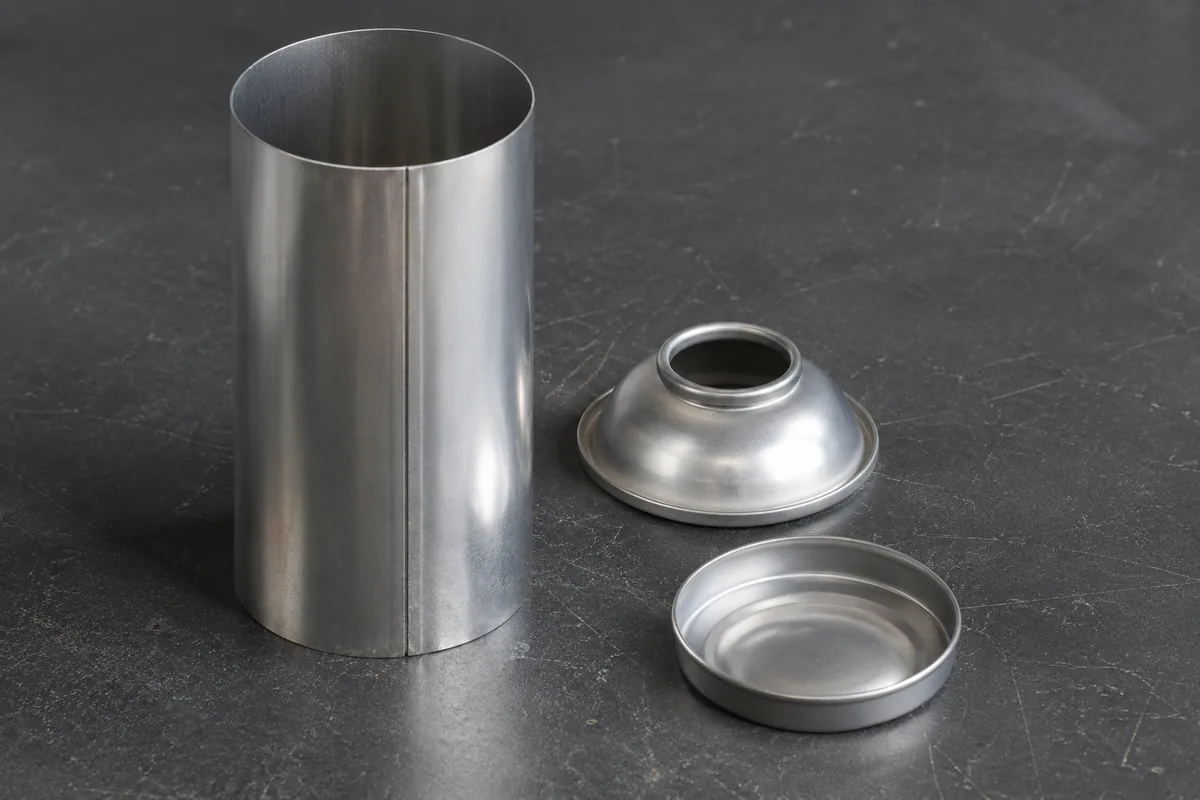
The refillable beauty category crossed from niche to default in 2026. The global refillable packaging market is projected to grow from $48.5 billion in 2026 to $69.6 billion by 2035, and refillable colour cosmetics alone are compounding at 11.2% a year. The signal for brands is clear: a leading K-beauty night cream that shipped with a refill pod lifted its repurchase rate from 22% to 51%, while the refill insert cost roughly 40% less than a second full jar. Metal tins sit at the centre of this shift because they are the only cosmetic tin packaging format that is genuinely mono-material — a single grade of steel or aluminium that is infinitely recyclable without separation.
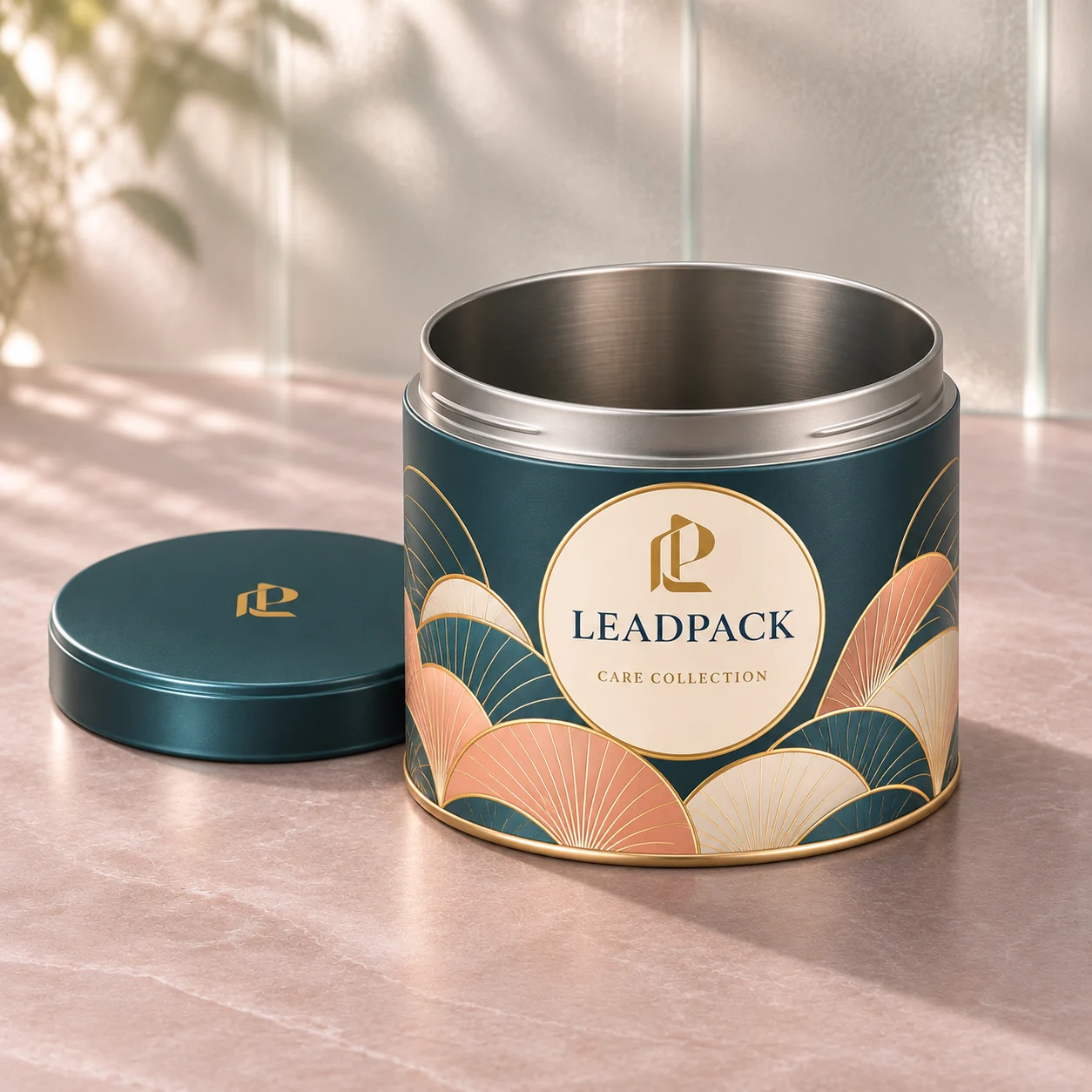
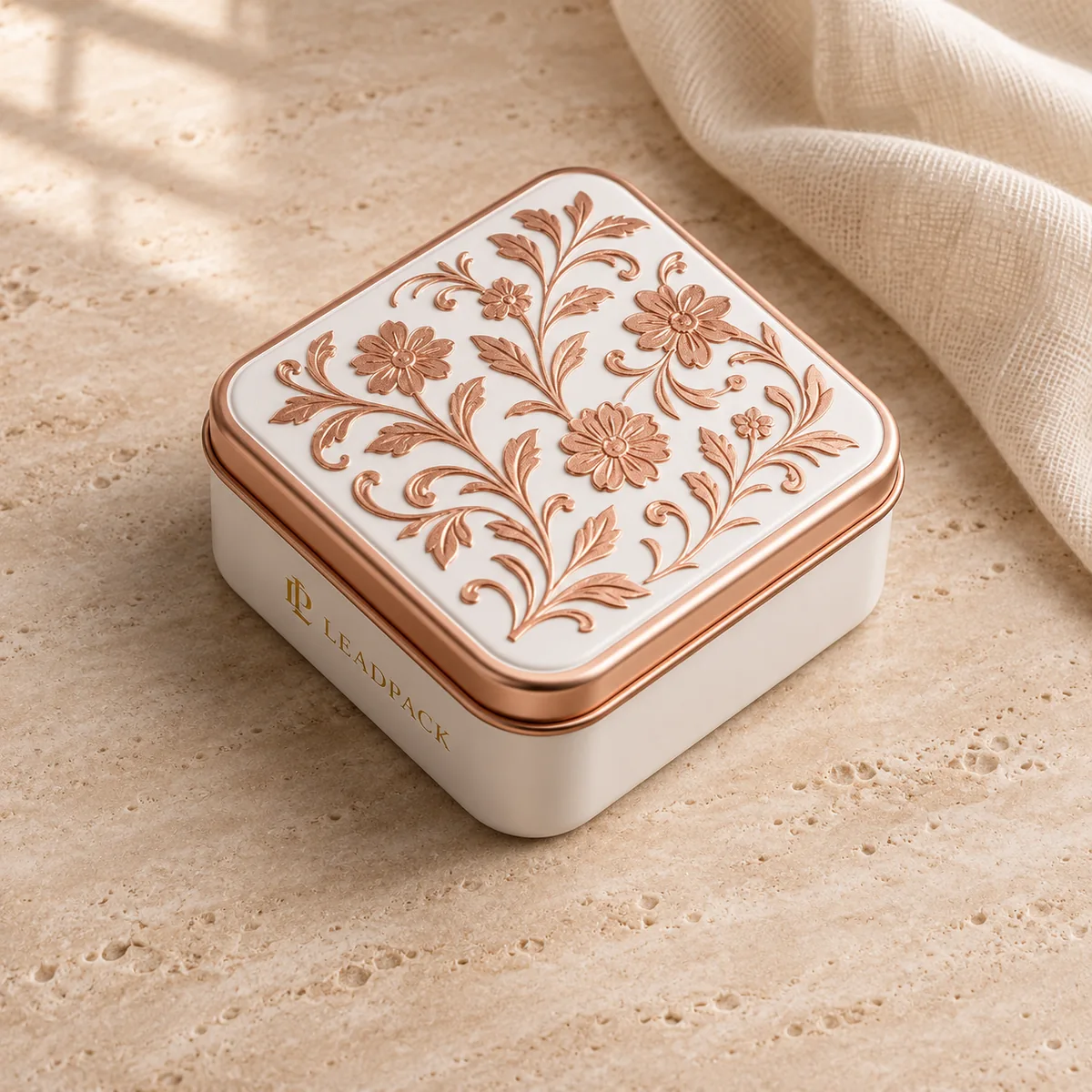
That mono-material story also answers the regulation buyers keep asking about. Under the EU PPWR, recycled-content minimums apply only to plastic packaging; tinplate carries no PCR mandate and recycles at roughly 84.5% in practice. For a brand building a refill loop, a rose-gold cosmetic tin with a screw-on refill pod is both the premium hero and the compliant choice. Glass, by contrast, is heavier to ship, breaks in transit, and rarely closes the loop as cleanly as a single-metal tin.
MOQ and Unit Pricing for Custom Refillable Tins
Refill programs work because the outer tin stays with the customer and only the inner pod ships. That changes the economics of MOQ. For a standard 30–50 ml cream jar or 5–15 g balm tin, expect:
- Low-MOQ pilot runs: 500–1,000 units per design, ideal for DTC launches and crowdfunding batches.
- Standard production MOQ: 1,000–3,000 units, the sweet spot for unit price and tooling amortisation.
- Unit cost: $0.90–$2.80 per empty tin at 1,000–3,000 MOQ, before the refill pod; a simple slip-lid balm tin lands near the low end, a deep-drawn jar with embossing and foil near the high end.
- Refill pod: $0.25–$0.70 per pod depending on wall thickness and lining.
These figures track closely with our broader breakdown of custom cosmetic tin MOQ and pricing, with the refill pod adding a small, repeating revenue line rather than a one-off container cost. Because the pod is small and light, your ongoing fulfilment cost per refill is a fraction of sending a full glass jar.
Lead Times: From Sample to Shelf
A refill program has two clock speeds — the hero tin and the fast-moving pod:
- Sampling: 10–14 days for a decorated pre-production tin, essential because rose gold foil and matte lacquer read very differently on real metal than on a screen.
- Mass production: 30–35 days after sample approval for standard shapes; 45–55 days for fully custom diameters that need a new die.
- Sea freight: 30–40 days to the US or EU. Brands targeting a Q4 launch should lock tooling by late September, since the pre-Christmas sea window closes around 20 September.
- Refill pod replenishment: 20–25 days, fast enough to ride a sell-through spike without holding six months of finished inventory.
Design and Customization That Drives Repurchase
The whole point of refill is the second purchase, so the on-boarding experience has to feel intentional. The finishes that convert in 2026 are:
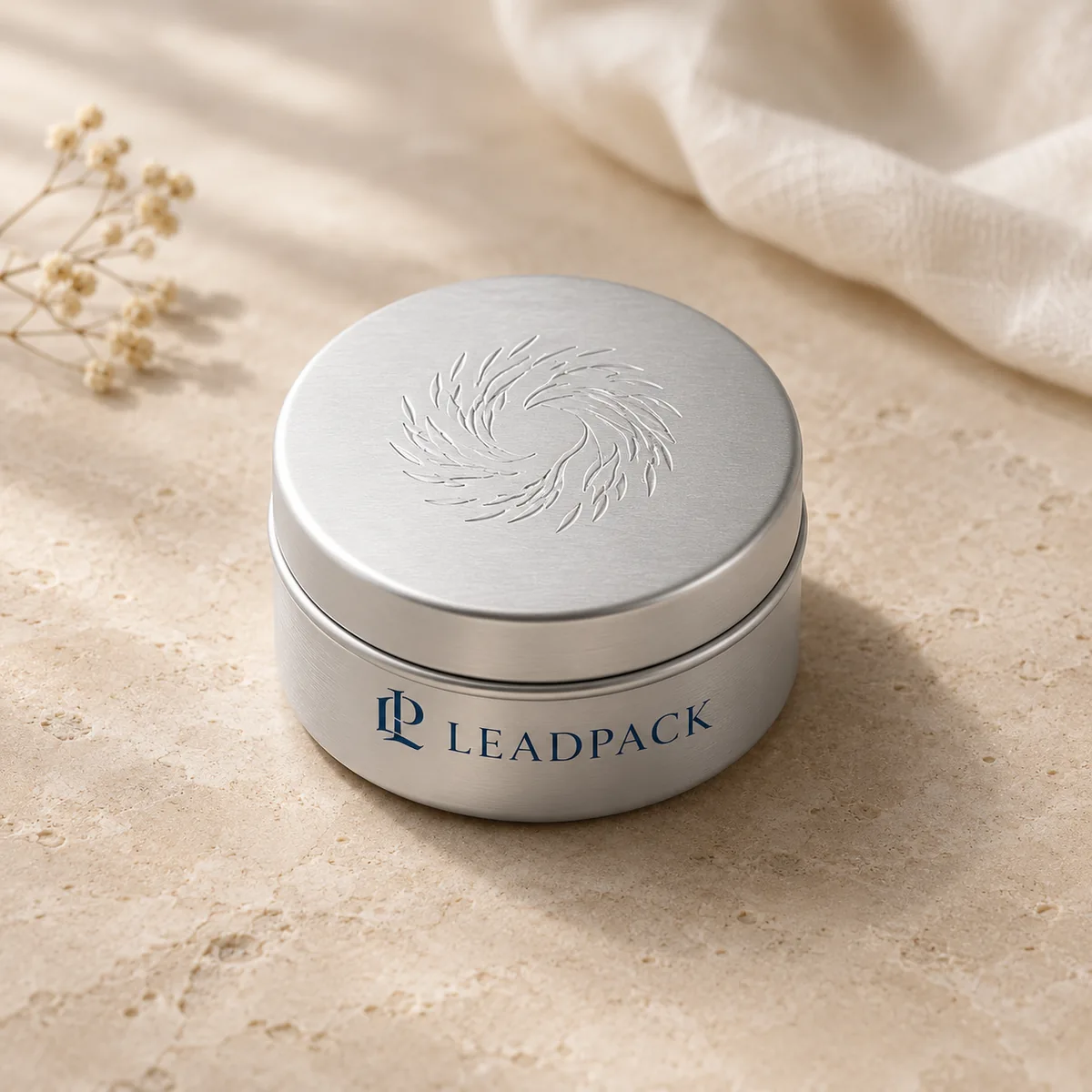
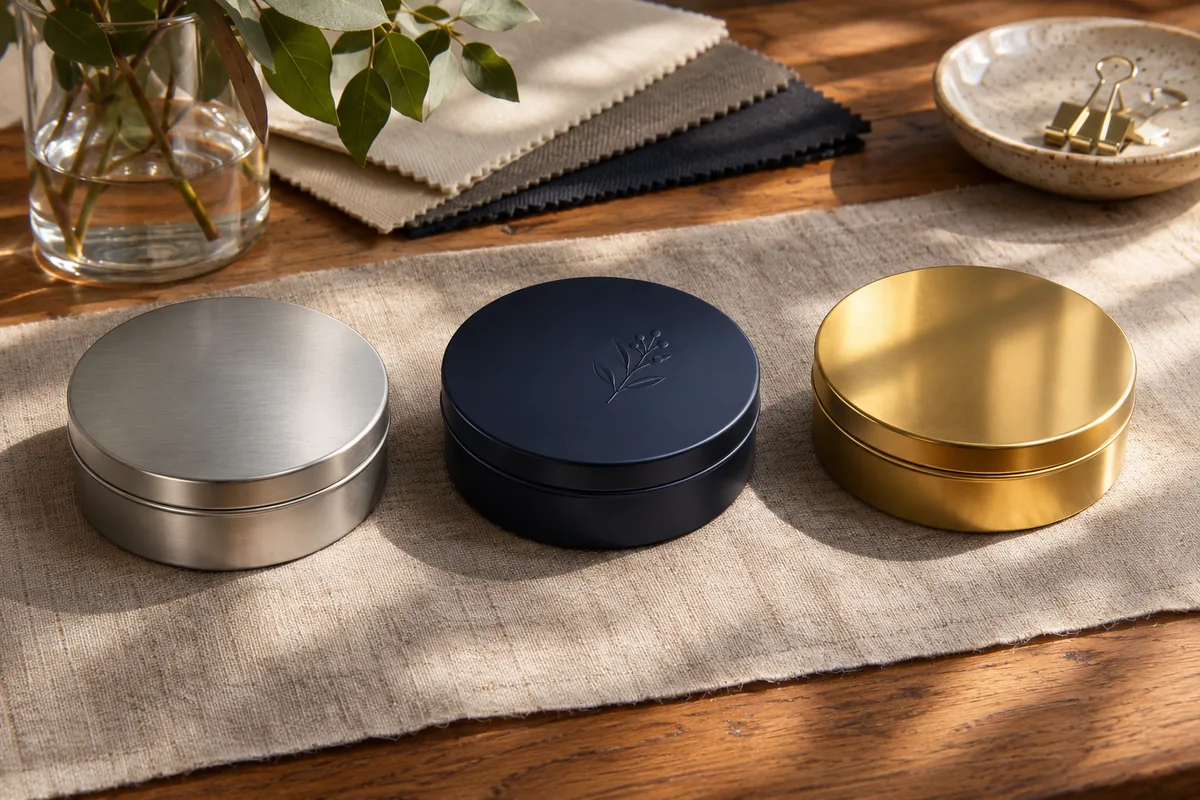
- Transparent lacquer over raw metal — the "quiet luxury" look that shows the tin is real steel, not plastic.
- 3D embossed logo — tactile, photo-friendly, and impossible to fake with a sticker.
- Rose-gold or brushed-copper foil — premium without the dated red-and-gold holiday feel.
- Soft-touch matte varnish — the ceramic-like surface that photographs cleanly on social.
- QR or NFC in the base — links the customer to a refill order in one tap, the format PACKNODE and JC Cosmopack now flag as standard for 2026.
On the inside, specify a BPA-NI or Gen-2 polyester coating and confirm LFGB / FDA 21 CFR 175.300 compliance so the tin is food- and skin-contact safe across markets.
Refill vs Recycle: Which Claim Belongs on the Carton
Two claims get confused. "Recyclable" describes what happens at end of life; "refillable" describes what happens before it. The strongest 2026 brands state both honestly: the tin is refillable for the customer and infinitely recyclable for the fraction that is eventually discarded. Because mono-material tinplate needs no separate PCR quota under PPWR, you can make the recyclability claim with a clean technical file rather than a plastic-heavy compliance workaround.
How to Brief Your Manufacturer for a Refill Program
A tight brief is what keeps a refill launch from slipping three weeks. Send your supplier five things: target capacity (30 ml jar vs 10 g balm), the hero finish plus one restrained secondary finish, the refill pod interface (screw, click or slip), the coating and compliance documents you need, and your launch date so they can confirm whether an existing mould already fits your diameter. Reusing an active mould cuts both the entry MOQ and 2–3 weeks of tooling.
Get a Refillable Cosmetic Tin Quote
If you are planning a 2026 refill launch, request a refillable tin quote with your target size, finish and MOQ, and we will confirm which existing moulds can deliver your palette before the sea-freight window closes. For a wider look at how premium packaging design is moving this season, see our guide to UK holiday tin design trends for 2026.
Need Help Choosing the Right Tin?
Tell us what you plan to pack and share an article or model you found useful. We can help confirm size, closure and sample options.