
At a glance
| Material | 0.23 mm tinplate for the new round collection |
|---|---|
| Diameter | 60 / 73 / 90 / 105 mm; confirm model and closure compatibility |
| Height | Custom; approve usable filling space with a sample |
| Printing | CMYK / Pantone; embossing and debossing available |
| MOQ | 3,000 pieces |
| Production | 30–40 days for the new collection; freight additional |
| Samples | Existing samples free; custom-printed samples available |
1. Dimensions and fill fit
Measure diameter and height against the agreed drawing. Fill the sample with the intended contents or inner bag and check headspace, lid clearance and removal. Record the filling conditions.
2. Lid and seal
Open and close the assembled sample. Check lid fit and the agreed initial seal. Confirm the equipment needed for any membrane or easy-open component. Define tests and acceptance criteria for claimed barrier or leak performance.
3. Printing and decoration
Confirm logo placement, artwork version, CMYK or Pantone references, finish and any embossing or debossing. Approve a physical print reference where color accuracy is important; a screen preview is not a production color standard.
4. Materials and documentation
Confirm tinplate thickness, interior contact surface and any coating or component specifications. Request supporting documents relevant to the selected product and intended use. A generic certificate is not evidence for every configuration.
5. Export packing and commercial scope
Agree unit protection, carton arrangement and inspection criteria. Confirm quantity, tooling, sample charges, production lead time and separate freight responsibilities.
6. Approval record
Record the sample ID, drawing and artwork versions, agreed changes and approval date. Resolve open points before production authorization. Keep the approved reference for receiving inspection.
What evidence should accompany sample approval?
Record the model or drawing revision, sample dimensions, lid and initial seal components, actual fill trial and artwork reference. Attach clear photographs and the approval date. Keep unresolved checks visible. A blank worksheet or design illustration is not a measured result or a test certificate.
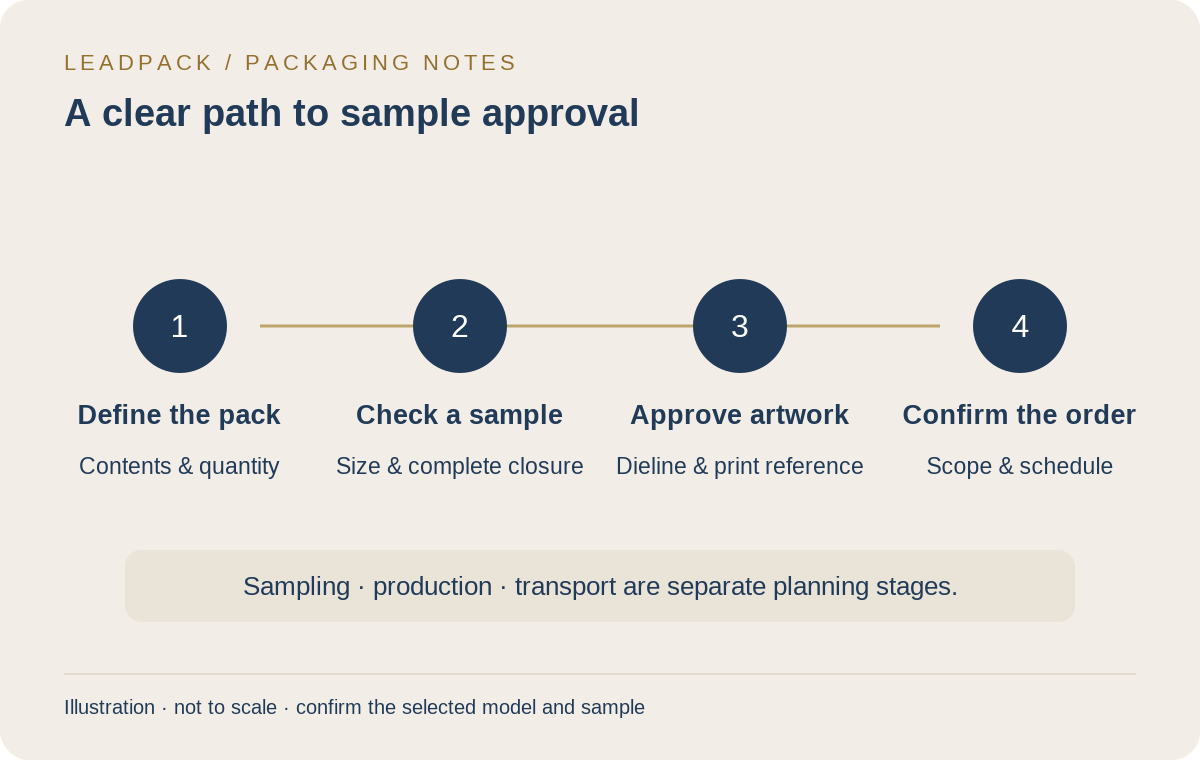
Record the sample you approve
| Record | What to document | Approval evidence |
|---|---|---|
| Model and dimensions | Body and lid identifiers, internal space and opening clearance | Dated measurements of the selected sample. |
| Fill trial | Actual contents, fill weight, headspace and lid clearance | Photos and results from your filling trial. |
| Artwork and finish | Artwork revision, print layout, color reference and embossing position | Agreed artwork file and physical print reference. |
| Closure and initial seal | Body, lid, initial seal and filling equipment | Approved assembly and any project-specific test results. |
| Order scope | Quantity per artwork, packing, sample costs and delivery responsibilities | Written quotation linked to the approved sample configuration. |
Questions before ordering
Are existing samples free?
Existing samples are free; ask the team to confirm shipment arrangements. Custom-printed samples are available and should be quoted for the selected project.
Does approving a sample verify shelf life?
No. Shelf-life or barrier claims require validation using the actual contents and complete packaging under relevant conditions.
This is a manufacturer’s buying guide. Product suitability, any supporting reports and final commercial terms must be checked for the selected project.