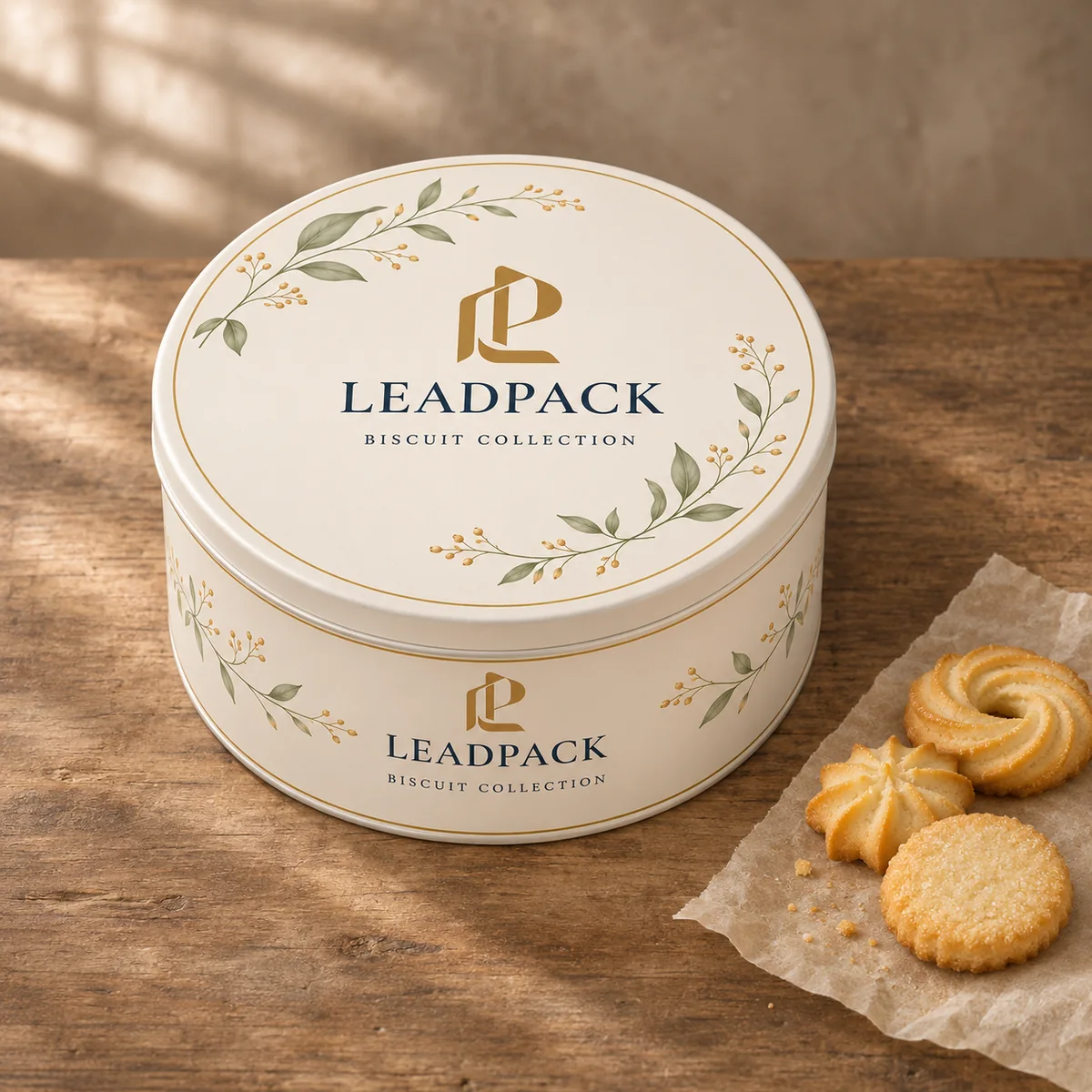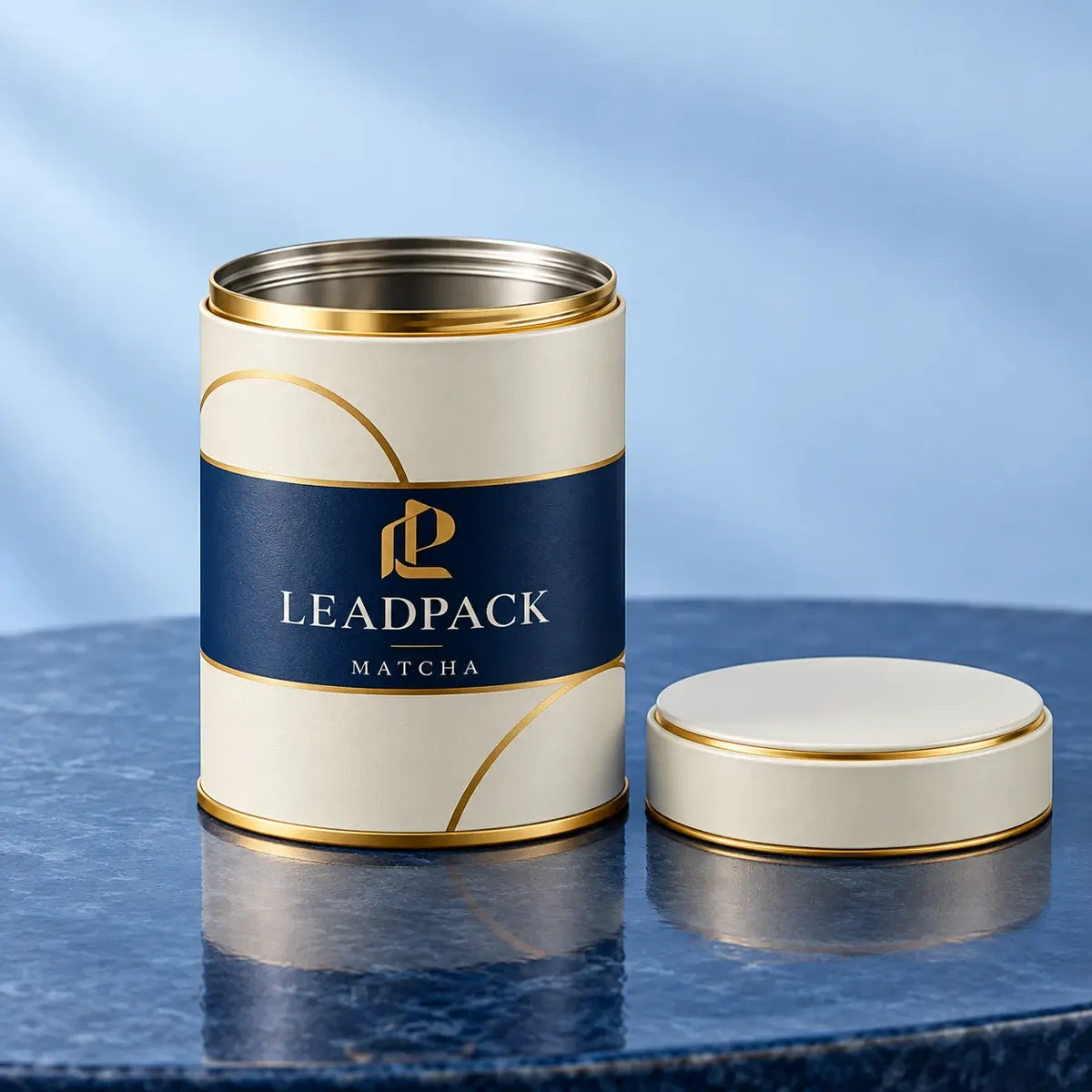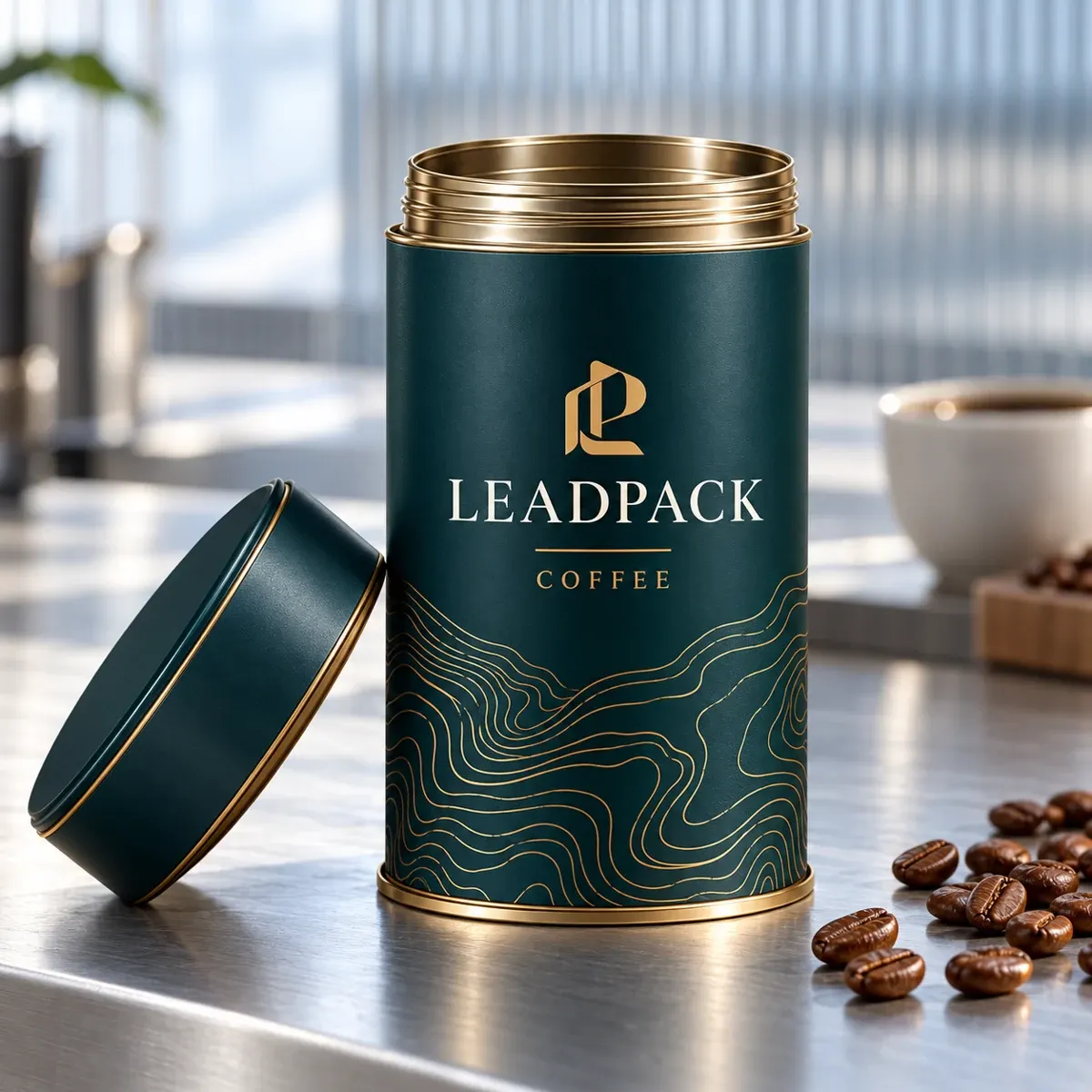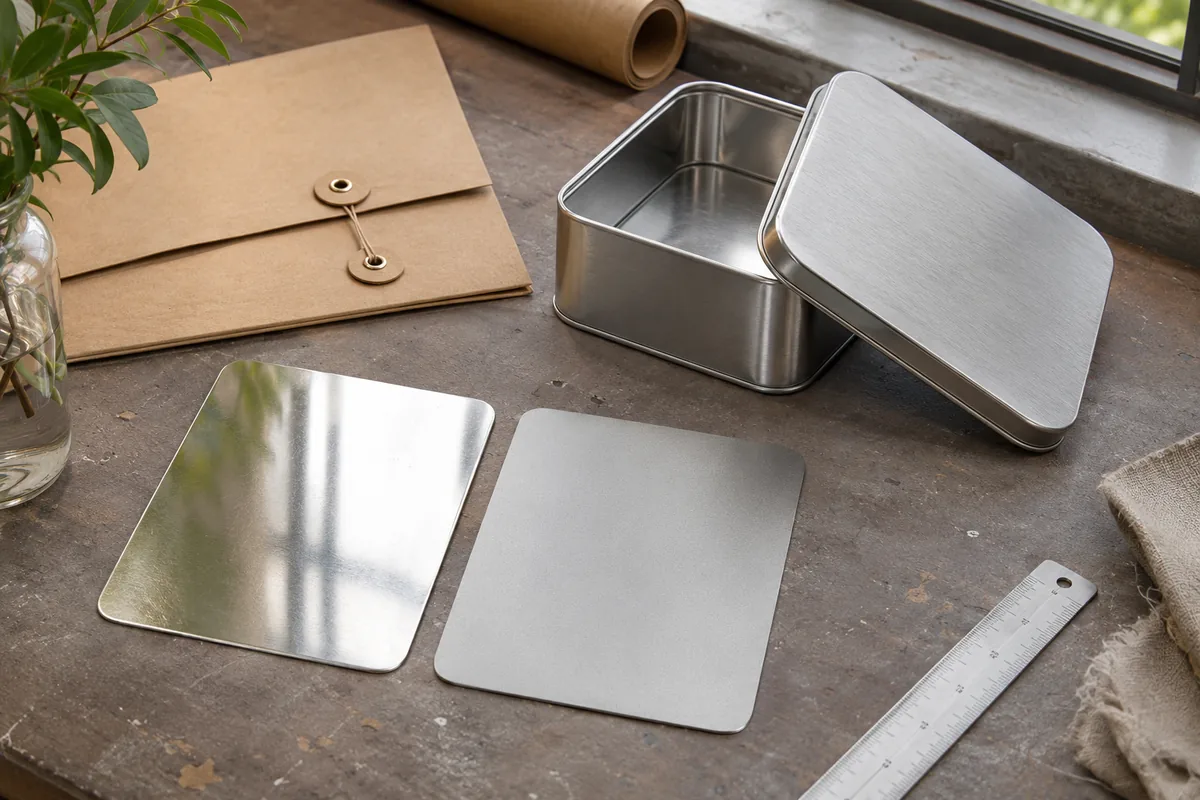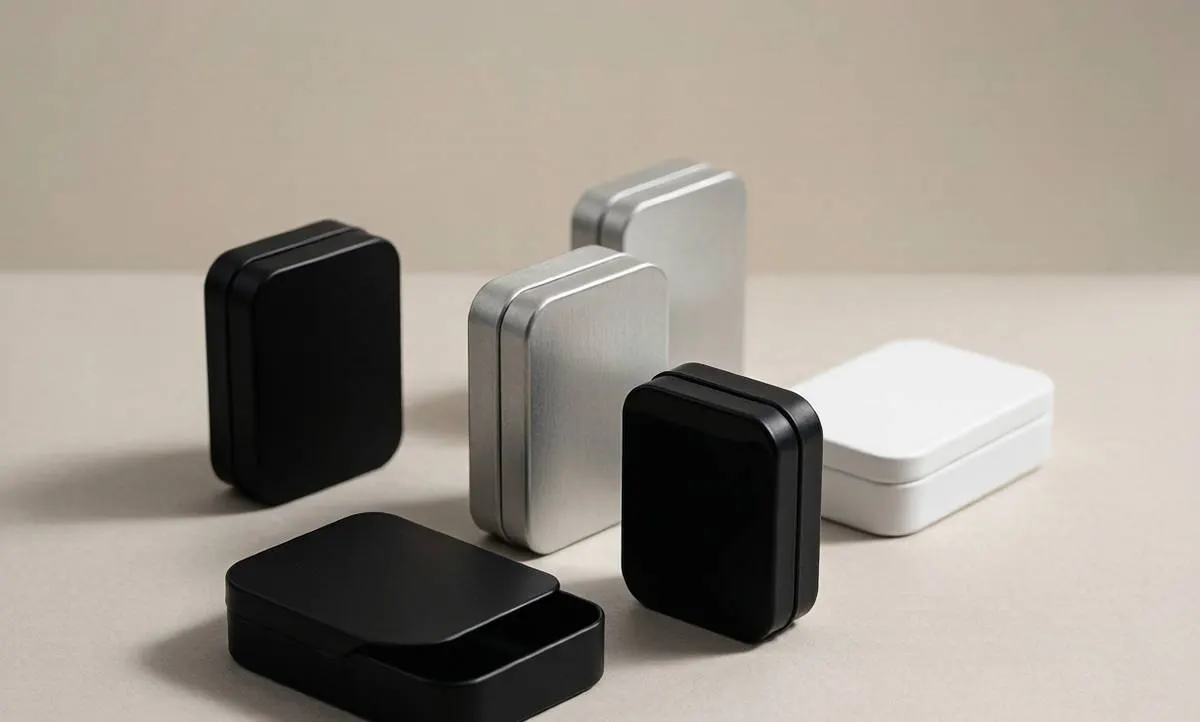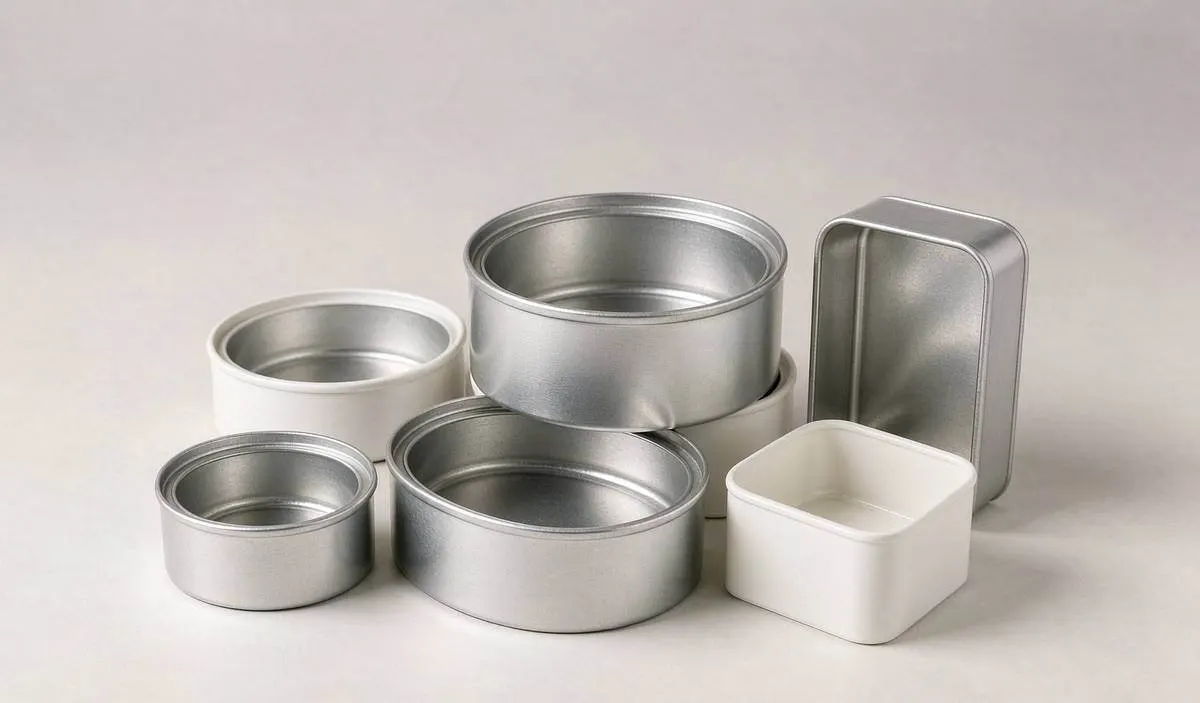
For two centuries the tin can's pitch was passive: airtight, light-proof, unbreakable, infinitely recyclable. None of that changed in 2026. What changed is everything happening around the can. Flexible NFC chips reached industrial volume production in Europe and China this year, and grown-to-shape mycelium inserts matured from design-fair curiosities into export-quantity supply. Together they turn a standard tinplate can into a two-way platform: the consumer taps the lid and the brand verifies the product is genuine; the unboxing opens on a compostable insert instead of a foam bed.
This guide covers both upgrades from a procurement standpoint — what the components actually cost at B2B volume, where the real engineering risk hides, and how to run a first pilot without betting a full production run.
Angle 1: Tap-to-Verify Turns the Tin Into a Brand-Owned Truth Machine
Counterfeiting is not an abstract risk for premium packaged goods. The OECD's most recent global mapping estimates trade in counterfeit goods at roughly USD 467 billion — about 2.3% of world trade — with cosmetics, spirits and luxury accessories among the most-targeted categories. A premium tin that retails at several times the price of its fake competitor is exactly the product criminals replicate, because the packaging is the brand promise.
NFC changes the economics of that fight. A secure NFC chip (NTAG 424 DNA class) generates a unique, cryptographically signed message on every tap. The consumer taps the lid with any phone — no app — and lands on a brand page that either confirms "genuine, first tap" or flags "this tag has been read 47 times before, in another city." Clone-and-replay attacks, which defeat printed QR codes trivially, fail here because the chip never repeats its payload.
There is a second benefit most buyers miss: tamper evidence. Because steel blocks radio signals, the tag must sit in an engineered pocket — typically a recessed well in the lid dome, coupled through a ferrite layer. Specified correctly, the inlay's antenna is severed the first time the tin is opened. A tin that taps "first time" at purchase is sealed; one that fails has been opened. You get authentication and tamper evidence from a single component.
NFC vs the Alternatives, at Real B2B Costs
The table compares authentication options for a 30,000-unit premium tin order. Costs are FOB China converter quotes for tag supply and integration, excluding the tin itself.
| Option | Cost per unit | Consumer friction | Clone resistance | Data captured |
|---|---|---|---|---|
| Printed QR code | $0.001–0.005 | Camera scan | Low — URL is copyable | Scans only |
| Serial number + online lookup | $0.01–0.03 | Type code on website | Medium | Lookups only |
| Holographic seal | $0.02–0.06 | Visual inspection | Low–medium, now replicable | None |
| NFC tap-to-verify (secure chip, on-metal) | $0.20–0.45 | Tap — no app needed | High — unique per-tap crypto | Timestamp, location, tap count |
QR codes win on cost, and for fast-moving food SKUs they remain the right answer. But at gift, spirits and prestige-cosmetic price points, a 25–45 cent component that makes counterfeiting uneconomic is cheap insurance — especially when it doubles as an opened/sealed indicator.
Angle 2: Mycelium Inserts Close the Plastic-Free Loop
The tin itself is already a recycling success story — steel is among the most-recycled packaging materials on earth, and a tin can is effectively mono-material. The weak link has always been what is inside: EPE foam beds, PET trays and polystyrene inserts that send a "sustainable premium" story straight to landfill.
Mycelium inserts are grown, not molded. Agricultural waste such as hemp hurd is placed in a shaped mold, inoculated with mushroom mycelium, and the organism binds the particles into a solid custom shape within 5–7 days. The part is then dried and demolded: a custom-fit insert that cushions like medium-density foam and home-composts in roughly 45 days.
For a tin can brand this is strategically clean: a metal shell plus a grown insert equals a package with no plastic in the unboxing at all. That matters commercially in the EU, where PPWR enforcement is sharpening and the greenwashing directive is forcing brands to reword packaging claims. "Compostable grown insert" is a claim you can document; "recyclable where facilities exist" increasingly is not.
Insert Options Compared for Gift and Supplement Tins
| Insert | Cost per unit (10k+) | Typical MOQ | Lead time | End of life |
|---|---|---|---|---|
| EPE foam bed | $0.10–0.25 | 5,000 | 10–15 days | Landfill; PPWR pressure |
| Molded pulp | $0.15–0.35 | 5,000 | 15–25 days | Widely recyclable; weak if damp |
| PET tray | $0.20–0.45 | 10,000 | 15–20 days | Stream-dependent |
| Mycelium, grown to shape | $0.35–0.90 | 1,000 | 7–14 days | Home-compostable, ~45 days |
Two facts in that table decide most tenders. First, mycelium has the lowest MOQ of any custom insert — growers work from small molds, so 1,000-unit pilots are routine. Second, its lead time is the shortest, because growth runs in parallel with tin production instead of after it.
The Procurement Reality: Metal Blocks Radio, and That Defines Your Spec
Here is the part first-time buyers discover too late: you cannot simply stick a standard NFC label inside a metal tin. The steel Faraday-cages the antenna and the tag reads nothing. Every functional smart tin uses an on-metal inlay — chip and antenna laminated onto a ferrite separator that tunes the tag against the metal surface. Budget accordingly:
- Standard NFC inlay (NTAG213 class, non-metal): $0.05–0.15 at volume — useless inside a tin
- On-metal inlay with ferrite layer: $0.15–0.35
- Secure on-metal chip (NTAG 424 DNA class): $0.20–0.45
Placement, Embossing and Food-Contact Boundaries
Placement is the second constraint. The tag needs to sit as close to the reading phone as possible, which in practice means the lid. For tins with a domed or embossed lid, the converter recesses the inlay into the dome well before lacquering — invisible, protected, and 2–4 cm from the consumer's phone at tap. Flat-lid tins use a base or side-wall pocket with slightly lower tap reliability, which is why we recommend embossed-lid formats for smart-tin projects. The same 3D embossing that houses the tag is also the premium cue described in our quiet-luxury packaging guide — one tooling decision, two payoffs.
Food-contact compliance is the third. The inlay never touches product: it sits on the exterior surface beneath the print and lacquer layers, and its adhesive is isolated from the food-contact coating. For food SKUs, the tin's existing FDA or LFGB food-grade certification is unaffected by an external tag — but confirm with your converter in writing that the tag assembly sits outside the coated food-contact surface.
Costs, MOQs and Lead Times: What a First Order Actually Looks Like
Real numbers from a 2026 smart-tin pilot configuration (premium round cosmetic tin, 30,000 units):
- Tin (existing mold, two-piece round, 80×50 mm): $0.42–0.68 per unit depending on finish; reusing an existing mold saves roughly 40% versus new tooling
- On-metal secure NFC inlay, encoded and provisioned: $0.28–0.40 per unit; converter minimum order 3,000 tags; unique-key provisioning takes 5–8 working days
- Mycelium insert, grown to shape: $0.35–0.90 per unit at 10,000+; 1,000-unit pilot lots accepted
- First-order lead time: 35–45 days (tin production 25–35 days plus tag provisioning and in-line insertion QC); reorders 30–35 days
- Total smart-tin premium over a standard tin: roughly $0.60–1.00 per unit — against the $3–8 retail premium that authenticated, plastic-free packaging supports
Compare that premium to what it replaces: a hologram ($0.02–0.06) that sophisticated counterfeiters now replicate, plus a foam insert ($0.10–0.25) that undermines the sustainability story. For any product above roughly $20 retail, the smart tin is not a cost — it is margin.
Who Should Move First
- Prestige cosmetics: the most counterfeited premium category, with the highest tolerance for packaging-as-experience. An embossed tin that taps to verify is a natural flagship SKU.
- Specialty tea and coffee: NFC doubles as freshness provenance — "this harvest was sealed on [date]" — a natural extension of the tin-over-pouch case for loose leaf.
- Spirits and holiday gift sets: authentication plus a compostable insert turns the empty tin into a keepsake rather than recycling-bin guilt.
- Collectibles and supplements: verified-first-tap status protects resale value and dose integrity respectively.
How to Run a 5,000-Unit Pilot in Six Weeks
- Week 1: Fix the SKU and choose the chip security level — NTAG213 for basic engagement, NTAG 424 DNA for authentication. Lock the landing-page flow; it must resolve "genuine / repeat tap / unknown tag" states.
- Week 2: Select an existing mold to skip tooling; approve artwork with an embossed lid dome to house the inlay. Order tag provisioning in parallel — it has the longest upstream lead time.
- Weeks 3–5: Tin production run; inlays inserted and tap-tested in-line before each lid is seamed. Mycelium inserts grow in parallel and need only 5–7 days.
- Week 6: Batch-level tap audit, then ship. Measure tap rate, first-tap success, repeat-tap flags and unboxing mentions.
A 3,000–5,000-unit pilot answers every scaling question — read reliability across phone models, tag survival through transit drops, consumer tap behavior — for under $4,000 in incremental tag spend. That is cheaper than one customs detention for a brand whose packaging gets cloned.
The Bottom Line
The tin can spent two centuries being the best passive package in the building. With NFC silicon now priced like a label and inserts grown rather than foamed, it is becoming an active one: it proves it is genuine, it tells you where it has been, and it goes into the compost instead of the landfill when the product is gone. Brands that re-spec their premium tins this year will own the "smart, plastic-free, verified" position before it becomes table stakes — and the traceability advantages mono-material tin cans already hold over paper-based packaging will keep compounding the story.
Ready to spec your first smart tin run? Send us your SKU and target market through our customization page, browse base formats in the luxury cosmetic tin range, or explore the category through our cosmetics industry hub. For the compliance documentation side, read how mono-material tin cans dodge EUDR paper traceability — and when you are ready to quote, contact us for a 48-hour MOQ and lead-time response.
Need Help Choosing the Right Tin?
Tell us what you plan to pack and share an article or model you found useful. We can help confirm size, closure and sample options.