
At a glance
| Material | 0.23 mm tinplate for the new round collection |
|---|---|
| Diameter | 60 / 73 / 90 / 105 mm; confirm model and closure compatibility |
| Height | Custom; approve usable filling space with a sample |
| Printing | CMYK / Pantone; embossing and debossing available |
| MOQ | 3,000 pieces |
| Production | 30–40 days for the new collection; freight additional |
| Samples | Existing samples free; custom-printed samples available |
Measure the usable space
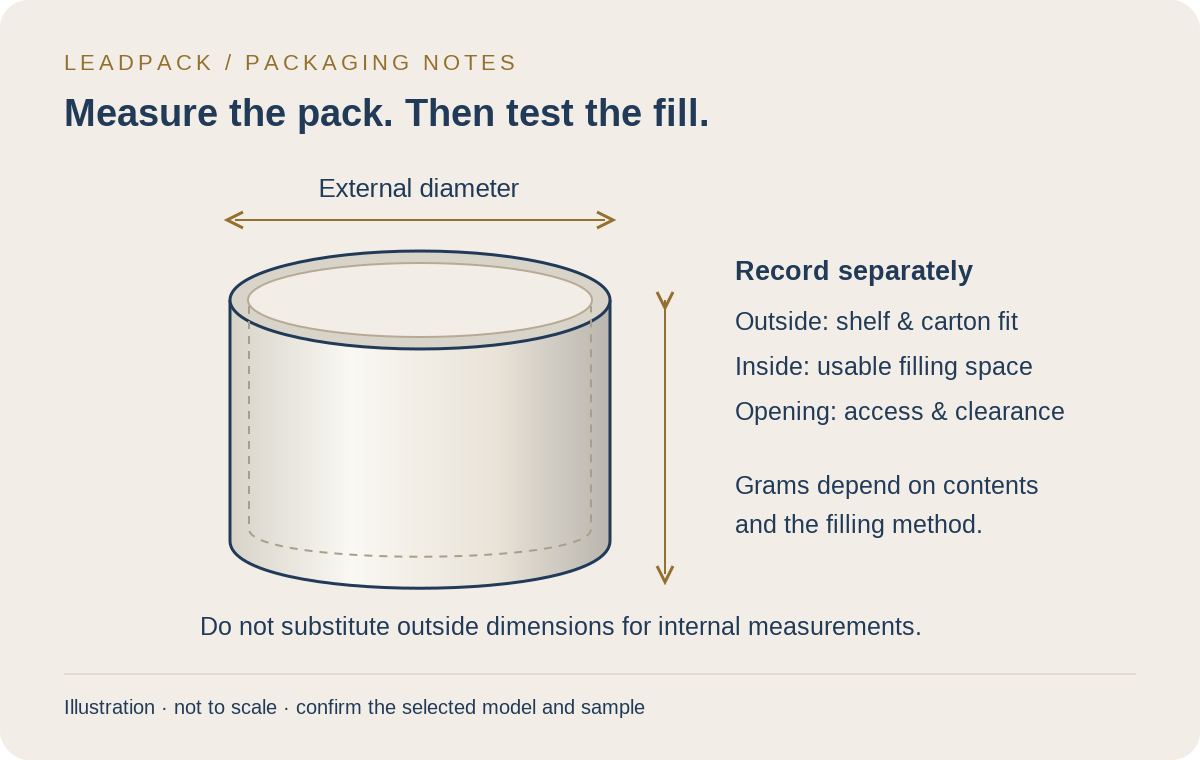
Record the outer diameter and height, then confirm internal diameter, usable filling height, lid clearance and headspace with the selected model. External measurements do not equal usable capacity.
Screw lid
A threaded lid provides a reusable opening. Confirm thread fit, opening effort and whether an independent initial seal is needed. A screw cap alone is not a verified hermetic barrier.
Easy-open lid or peel-off membrane
Both are available as optional initial-opening configurations for suitable welded screw-lid projects. Confirm component compatibility, filling access and sealing equipment. Do not substitute one for another without sample approval.
Clip lids and alternative designs
Some collection images show clip closures or other lid constructions. Choose these as a separate configuration and verify fit, any gasket material and intended use. Standard screw-lid options do not mean every illustrated tin has the same closure.
Record the final agreed specification
Approve one reference specification covering dimensions, material, coating, closure, artwork, packing and quantity. Keep the signed sample and agreed drawing as the basis for inspection.
How to estimate cylindrical volume
For a simple cylinder, geometric volume in mL = π × internal diameter² × usable fill height ÷ 4,000, with both measurements in millimetres. For example, 60 mm internal diameter and 80 mm usable height give approximately 226.2 mL. This is a calculation example, not a measured LEADPACK tin capacity. Curved bases, lid intrusion and filling clearance change the usable result.
Why millilitres cannot establish a gram capacity
Mass depends on the bulk density and filling method of the actual contents. Tea leaves, matcha, whole beans and ground coffee must not share a universal conversion. Record the material, fill weight, fill level and sample dimensions together before approval.
Which dimension should you record?
| Measurement | How to use it | Check |
|---|---|---|
| External diameter and total height | Shelf fit, label planning and carton layout | Include the closed lid and any projecting components. |
| Internal diameter and usable fill height | Estimate available cylindrical space | Measure inside the actual sample and allow the selected headspace. |
| Opening and lid clearance | Filling tools, scoop and consumer access | Confirm the complete lid and seal assembly. |
| Actual fill record | Approve the intended product weight | Use your contents and record the filling method. |
Explore the featured models
Questions before ordering
Can height be customized?
Yes. The new round collection offers custom height with 60, 73, 90 or 105 mm diameter options, subject to selected model and closure compatibility.
What size holds 30g of matcha?
Ask for a sample and test your own powder. Bulk density, filling and required headspace affect the size; no universal weight-to-diameter conversion is offered.
This is a manufacturer’s buying guide. Product suitability, any supporting reports and final commercial terms must be checked for the selected project.